Dec 2025
PureMetric
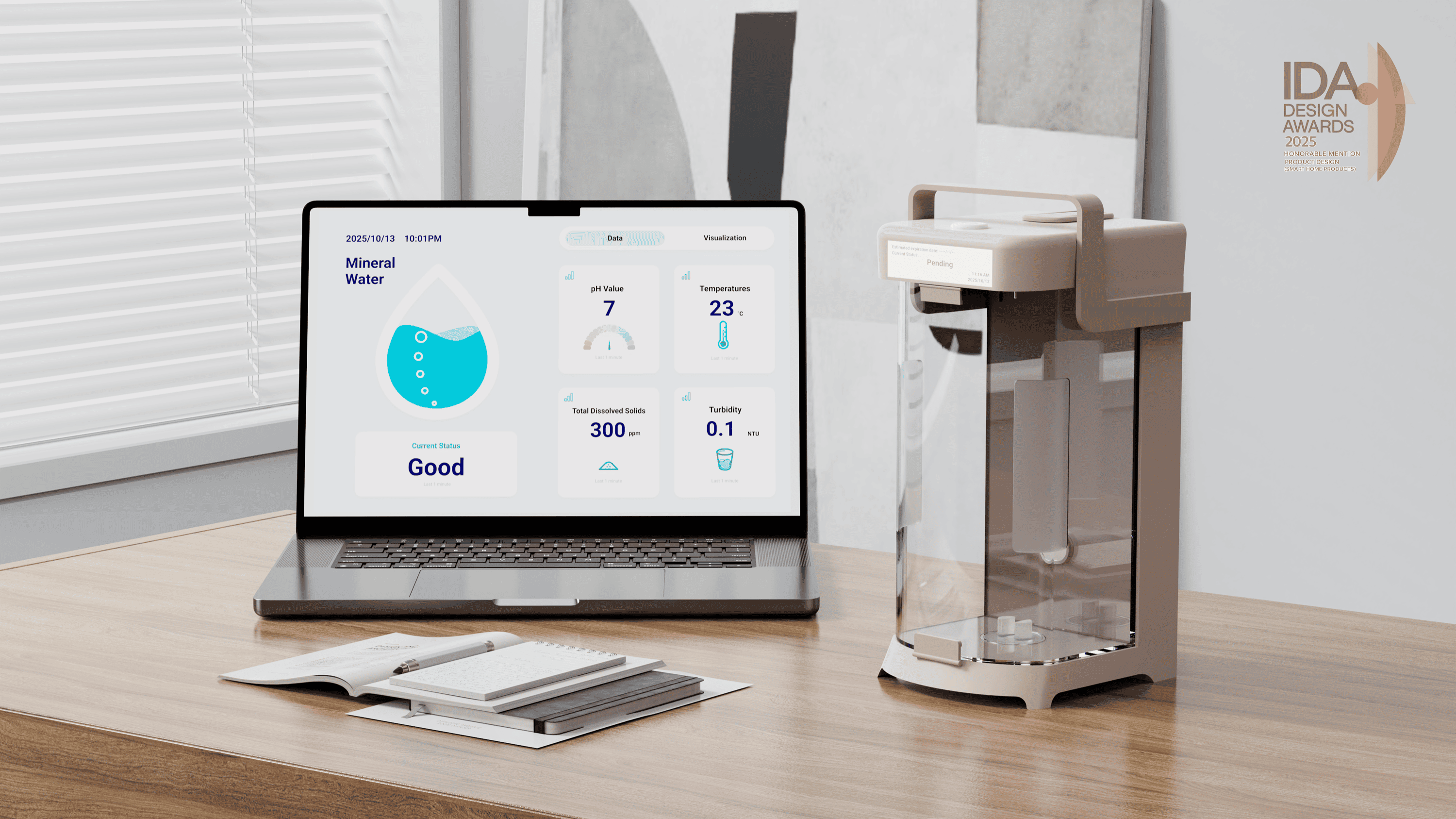
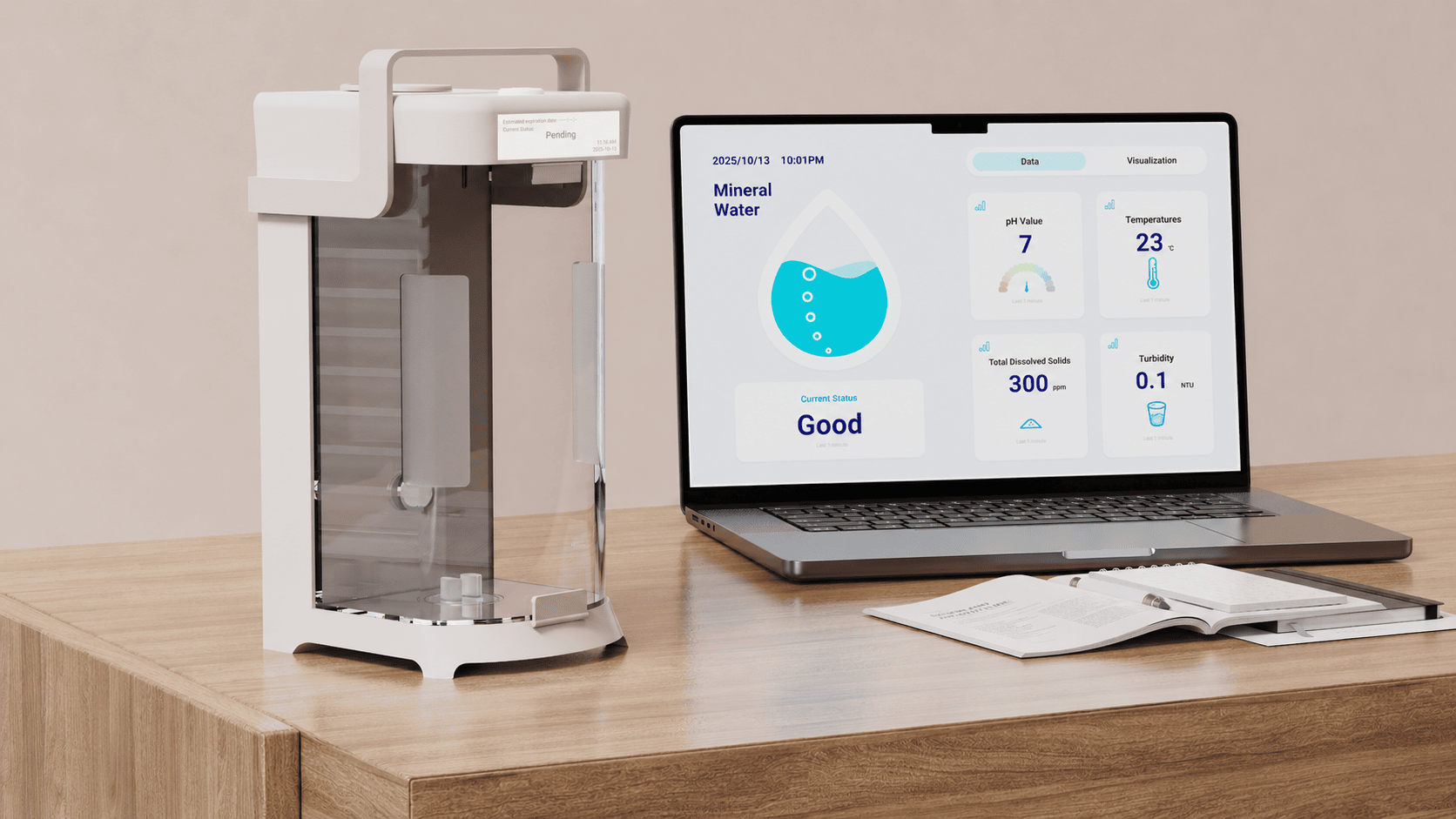
PureMetric is a sensor-based system for monitoring beverage freshness after a drink has been opened. It tracks pH value, temperature, total dissolved solids, and turbidity inside the container, streams those readings into a dashboard, and estimates how long the drink is likely to stay drinkable.
Sensing Motivation
Freshness is usually judged by look and smell, while the liquid itself changes in ways neither can catch early. PureMetric treats spoilage as a sensing problem instead. The question behind the build is whether four low-cost signals, sampled directly from the liquid, carry enough information to estimate how long an opened drink stays drinkable.
System Architecture
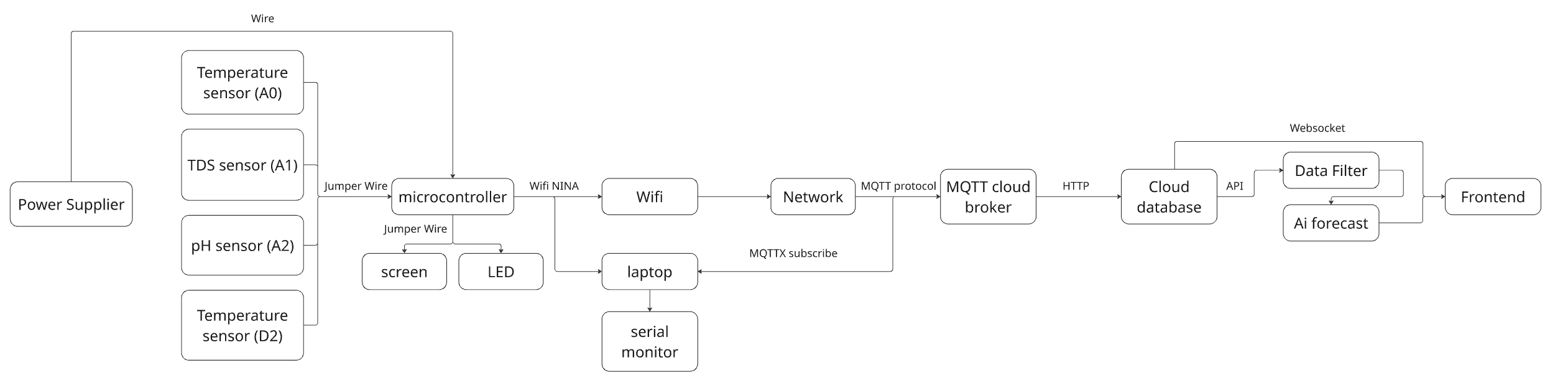
An Arduino Nano 33 IoT samples the four sensors once per second, three analog probes for pH, total dissolved solids, and turbidity plus a DS18B20 one-wire temperature probe, and classifies the liquid as good, alert, or bad on the device from baseline deviation, shown on an onboard OLED and status LEDs. Readings travel over USB serial during bench testing or MQTT over TLS in deployment. A Node.js backend fans them out to the dashboard over WebSocket, stores the time series in InfluxDB, and serves 24-hour history through a REST endpoint. The freshness forecast summarizes recent trends and refreshes the estimated expiration every two hours.
Sensing Prototype
Early prototype testing focused on whether the four signals could describe freshness together. pH value tracks acidity, temperature shapes spoilage speed, total dissolved solids reflects dissolved content, and turbidity captures cloudiness in the liquid.
A first version judged every beverage against one acceptable range, and it failed quickly because fresh drinks start from very different pH, dissolved solids, and turbidity levels. The fix was a baseline recorded for each new drink. Later readings are compared with that starting profile, with pH evaluated by distance from the baseline, dissolved solids and turbidity by percentage change, and temperature used to interpret how quickly those changes develop.
Serial test. Before the enclosure was finalized, the sensing stack was read through the serial monitor to check whether the full sensing pipeline stayed stable from sensor to computer.
Liquid test. The sensor set was placed directly in coconut water to observe how live readings behaved inside a real drink rather than a controlled setup.
A seven-day test with coconut water, sampled once per second, showed that raw readings were sensitive to movement, electrical interference, air bubbles, and probe position. In response, the system now collects and filters repeated readings before updating the status, and the enclosure holds the probes at a fixed depth.
Interface Design
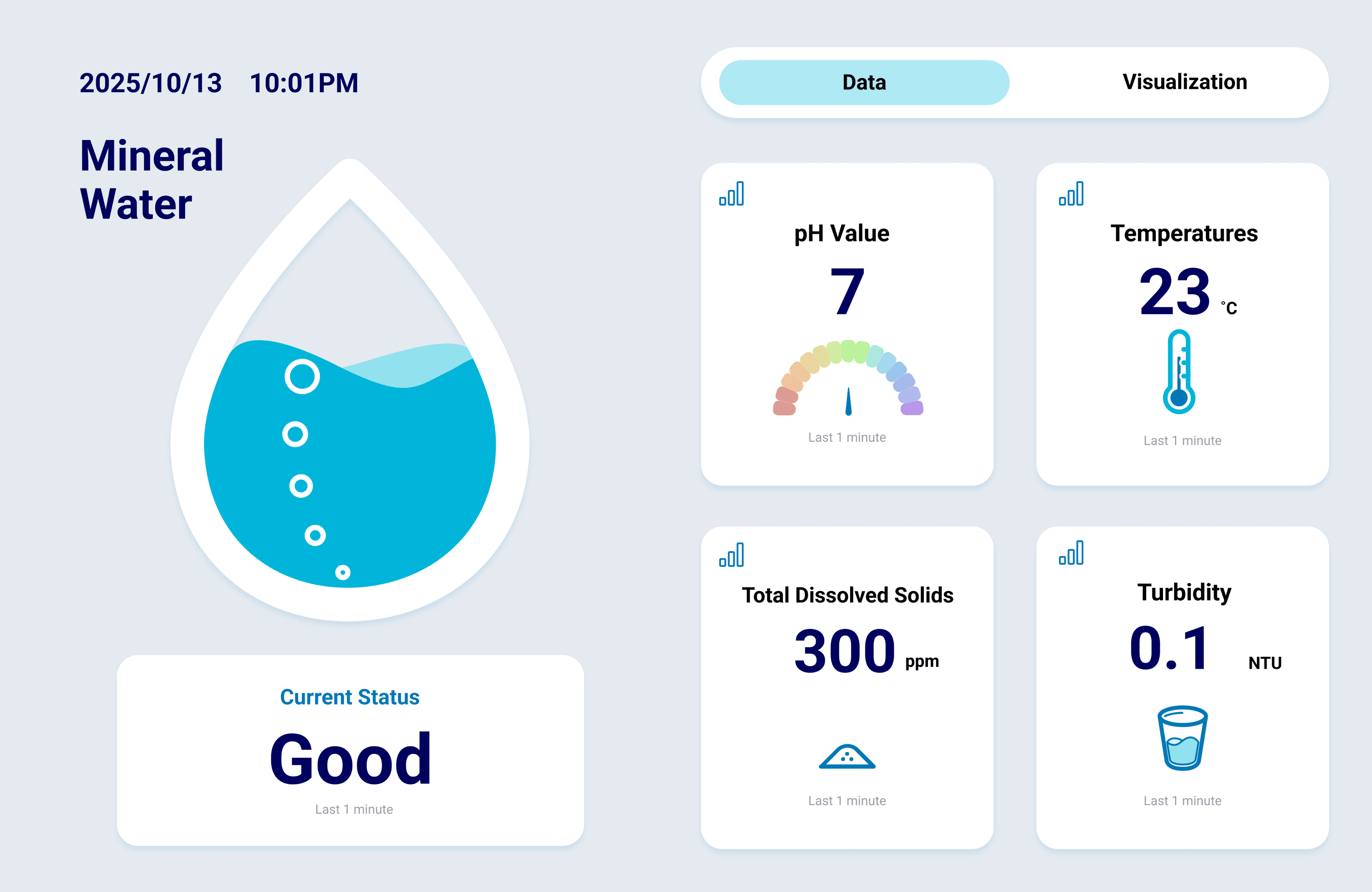
The dashboard works as the interpretive layer of the system. Live cards keep each signal legible at a glance, historical views make slower shifts easier to notice, and the forecast layer translates those sensor trends into an estimated drinkable window.
The trend views came out of user interviews. Six participants who regularly buy drinks in cartons all said a status alone was not enough, since a drink can read "Good" for days while the readings behind it keep moving. Trend charts for each signal were added next to the live values, and in follow-up interviews all six said the charts made them more confident that the status was current rather than stuck. The forecast itself weighs the direction and rate of change across all four signals, so two drinks with the same current status can get different estimated expiration dates.
Enclosure Engineering
The enclosure packages the sensing stack into a compact volume. Probe depth, board placement, reservoir geometry, and the split between wet and dry zones all had to be resolved together before fabrication. The electronics sit in the upper housing, and the probes extend near the bottom of the chamber so they stay submerged as the liquid level drops.
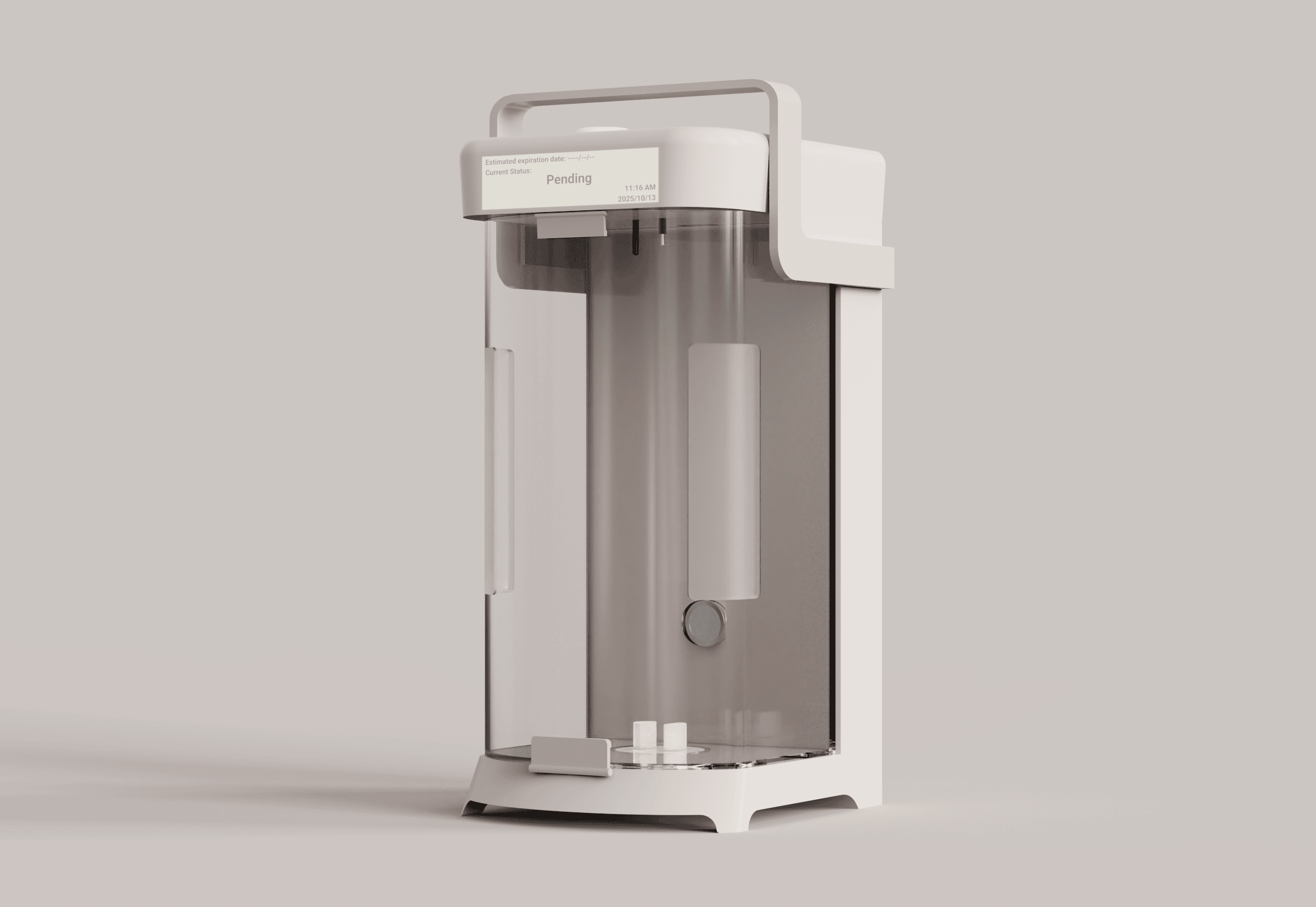
Product
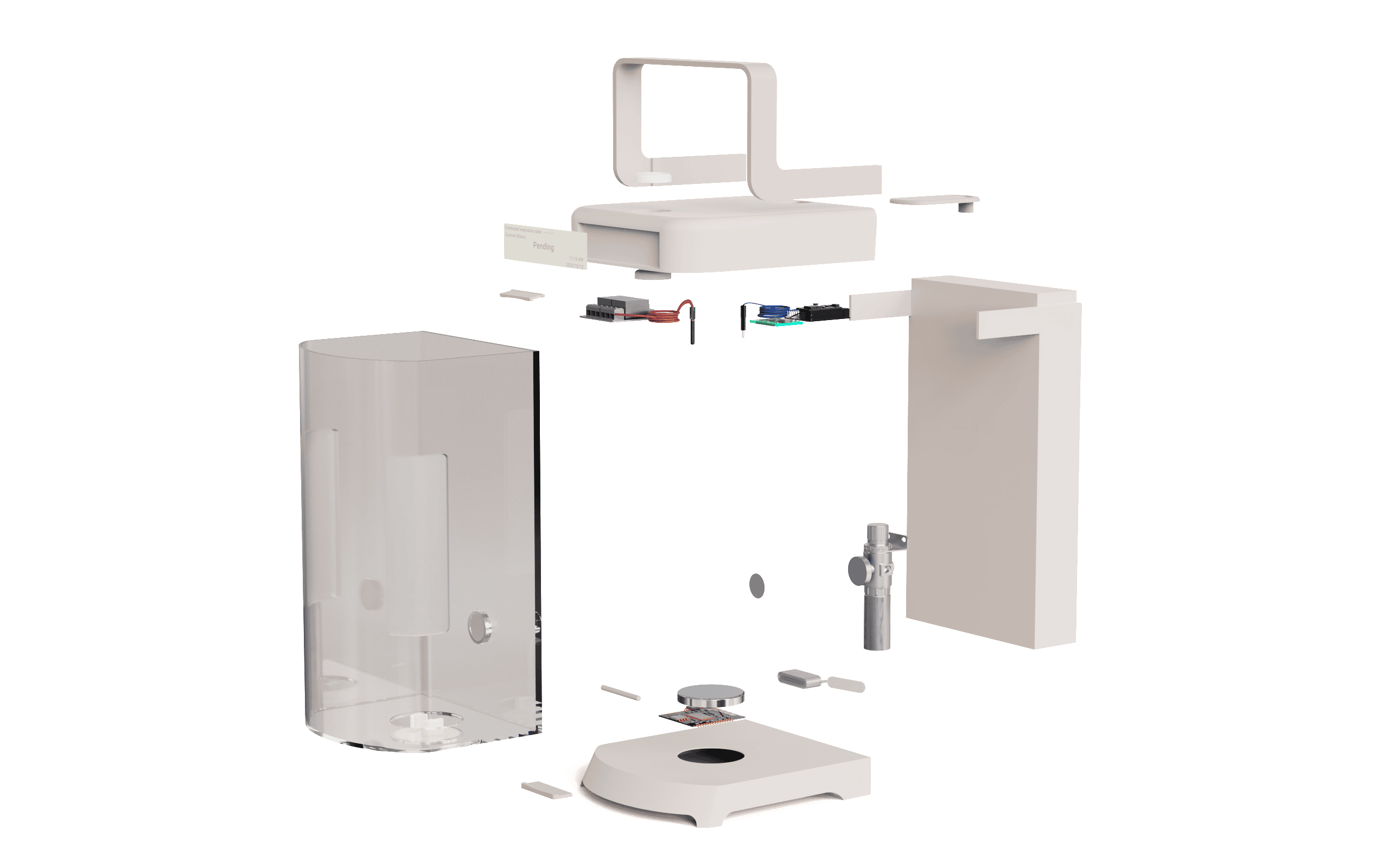
Exploded View
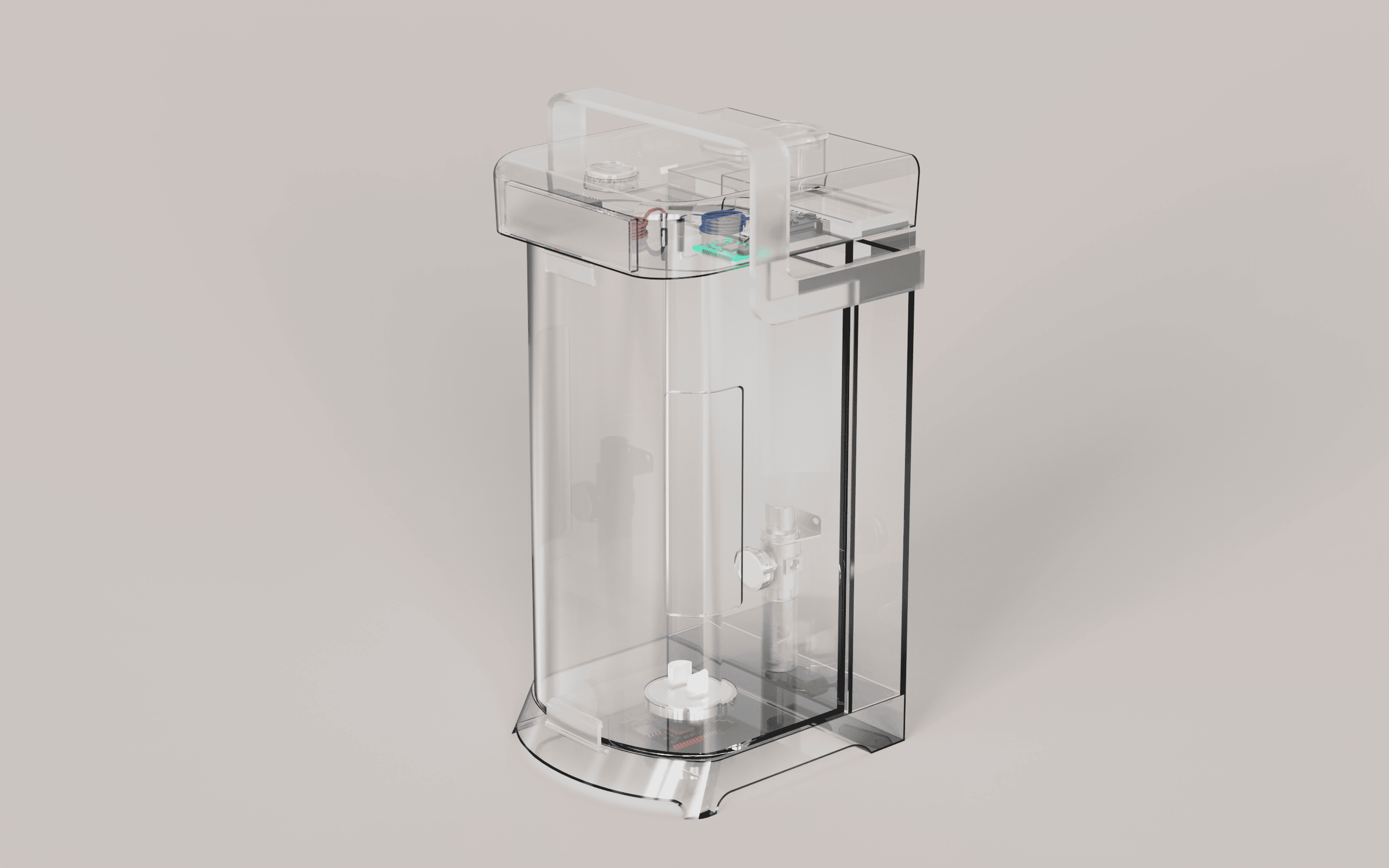
Internal Layout
Integrated System
Key status stays visible on the container during everyday use, while the app supports remote monitoring with the full sensor stream. This makes it easier to check live readings, review histories, and follow longer changes across pH, temperature, total dissolved solids, and turbidity.