Aug 2025
ZKP Dynamics
 Visit site ↗
ZKP Dynamics is a privacy-preserving Web3 asset verification system for individual users and auditors. Zero-knowledge proofs let a holder show that a requirement is met without disclosing balances or wallet history, and each issued result is anchored on-chain so it can be checked later.
Trust Model
Conventional Web3 asset verification workflows often ask users to reveal far more than a verifier actually needs. Sharing a wallet address can expose balances, holdings, and transaction history even when the task is only to confirm whether a required threshold has been met. ZKP Dynamics is built around review without revealing. The name covers the whole platform. The auditor side runs as an internal tool, and the client side later shipped to the public as RaiZ.
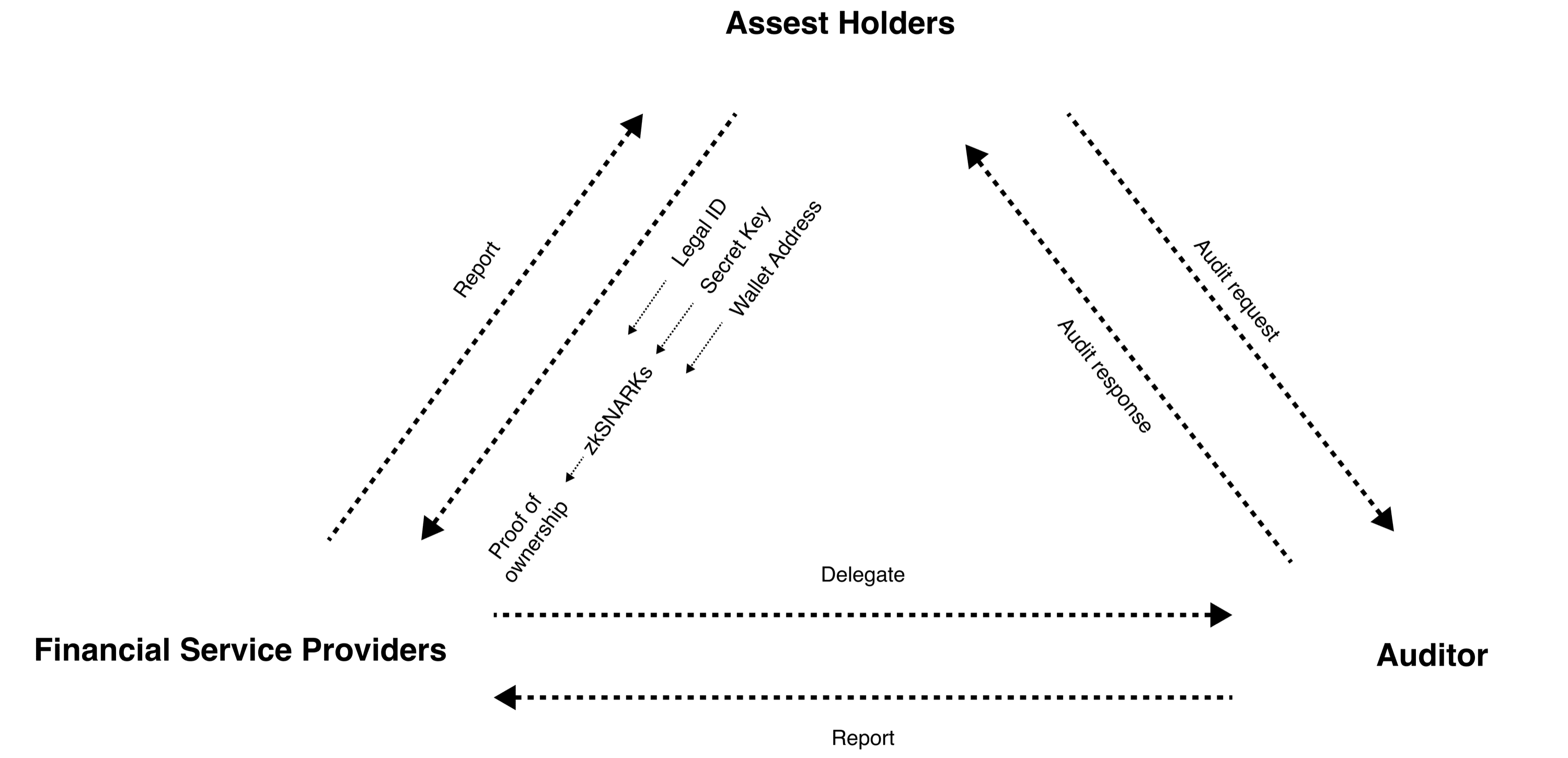
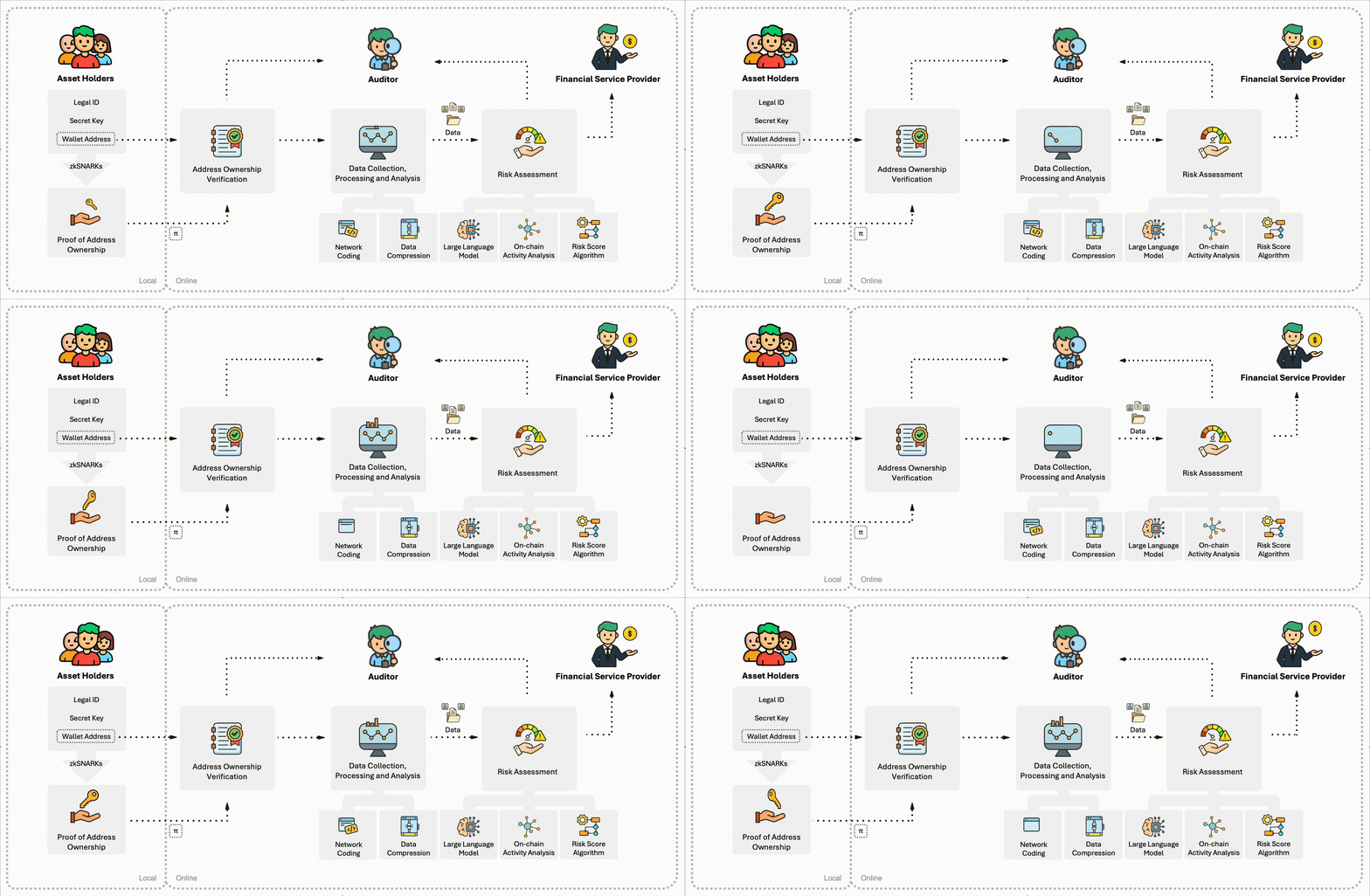
The system coordinates three roles. Individual users generate proofs through RaiZ, auditors review those proofs, and financial service providers consume the verification result. Zero-knowledge proofs carry only the facts required for verification, while private inputs remain on the user's side.
System Flow
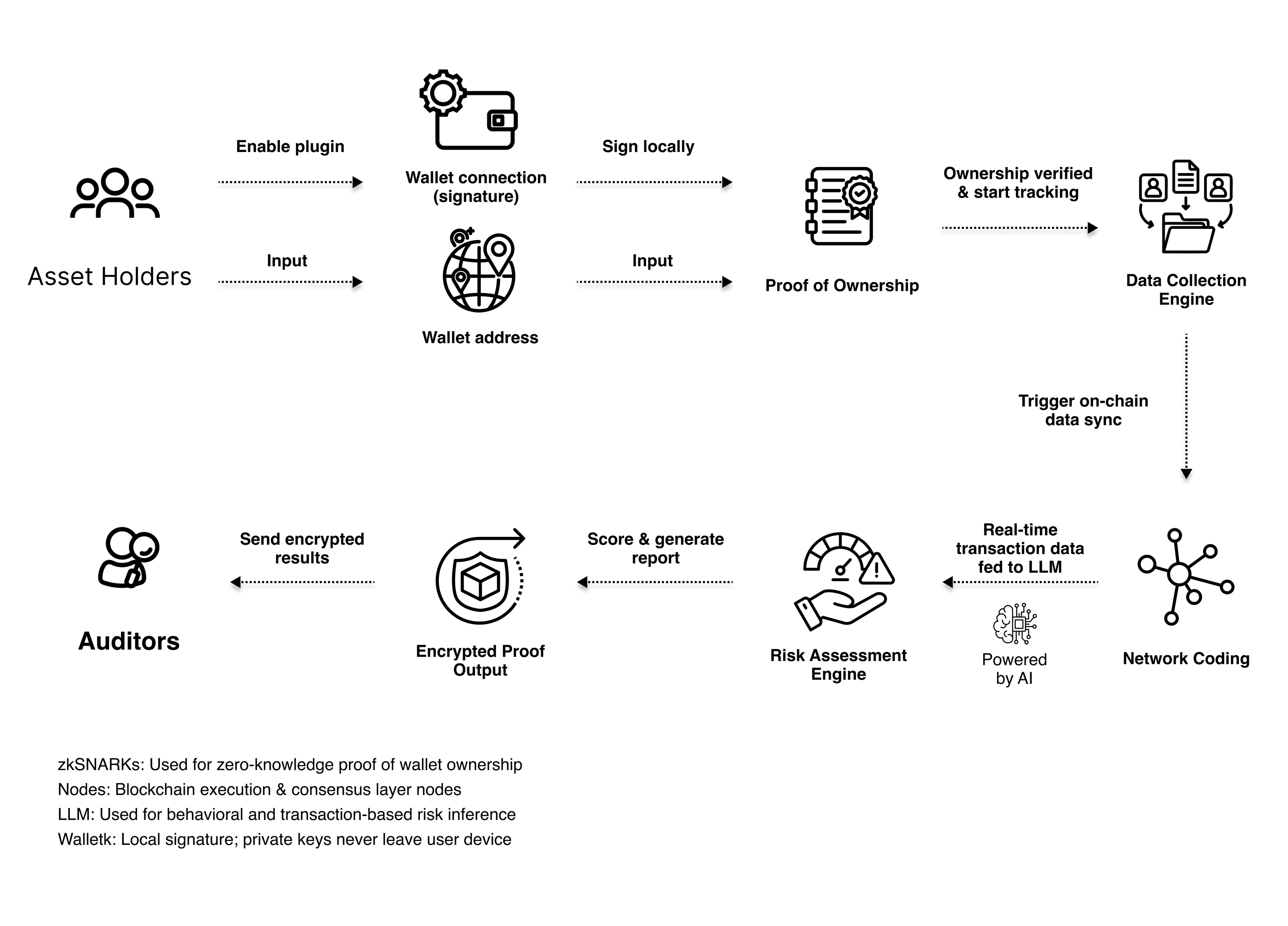
The flow begins with a user connecting a supported wallet and generating proof locally, so private credentials do not leave the device. Once ownership is verified, the system moves the required information through the assessment pipeline, where blockchain records, zero-knowledge proof verification, and LLM-assisted transaction analysis work together to produce a verification and risk result for the auditor. A corresponding record is then written on-chain so the issued result can be checked later.
Auditor & Client Flow
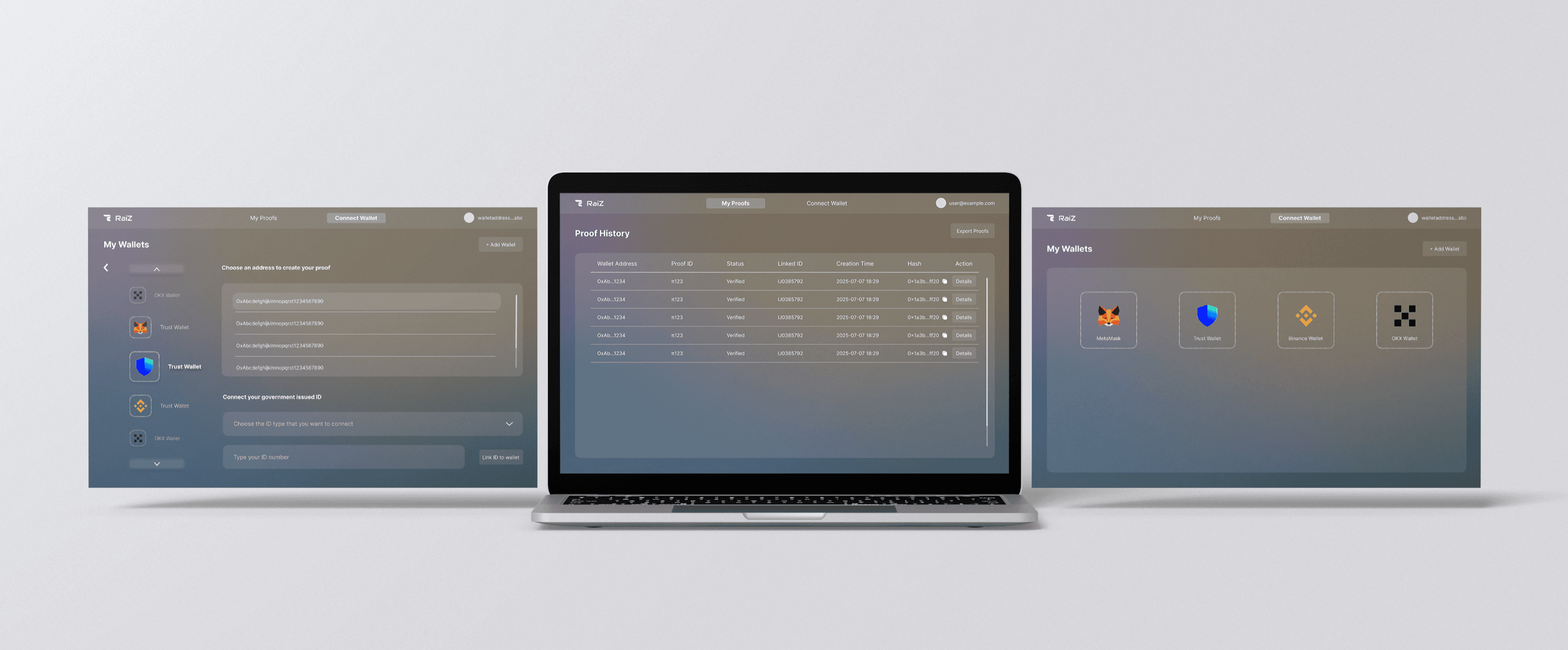
The system runs as two connected sides. On the client side, users connect a wallet, generate a proof, and send it forward for review. On the auditor side, institutions receive the proof, inspect the verification and risk result, and confirm the outcome without seeing the balances behind it.
Individual Flow
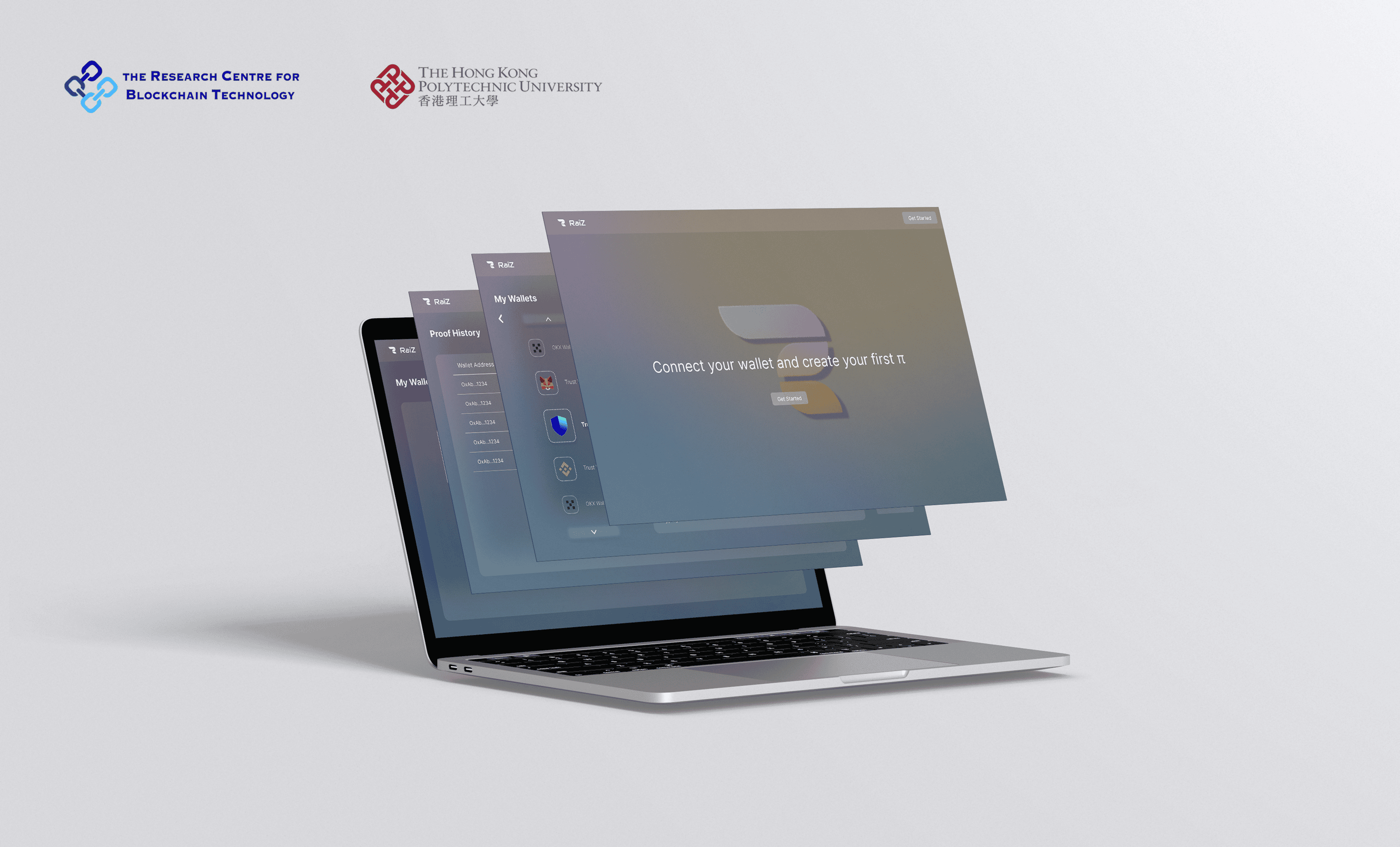
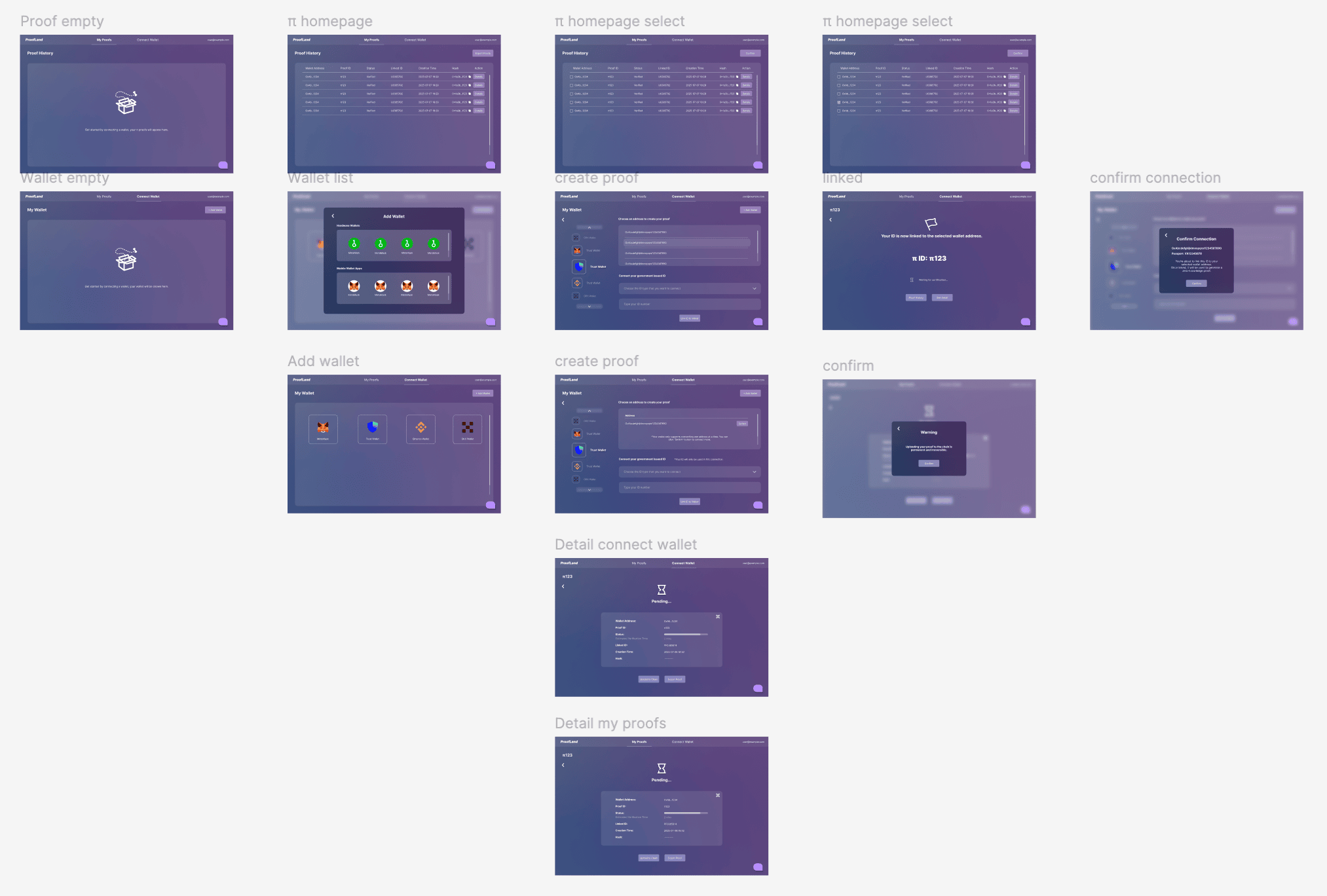
On the individual side, RaiZ lets users connect wallets, generate proofs, and submit the verification request to an auditor. After review, the verified result can also be recorded on-chain as an immutable proof for later use.
Usability Testing
An A/B test with 10 PolyU students compared the first working release against the redesigned flow. Each participant linked a wallet address to an identity credential and completed a verification request in both versions, half starting with each. Average completion time dropped from 2:15 to 1:45, about 22% faster, and every participant was faster in the redesigned version.
Trailer
Current Release