May 2026
Floating Umbrella

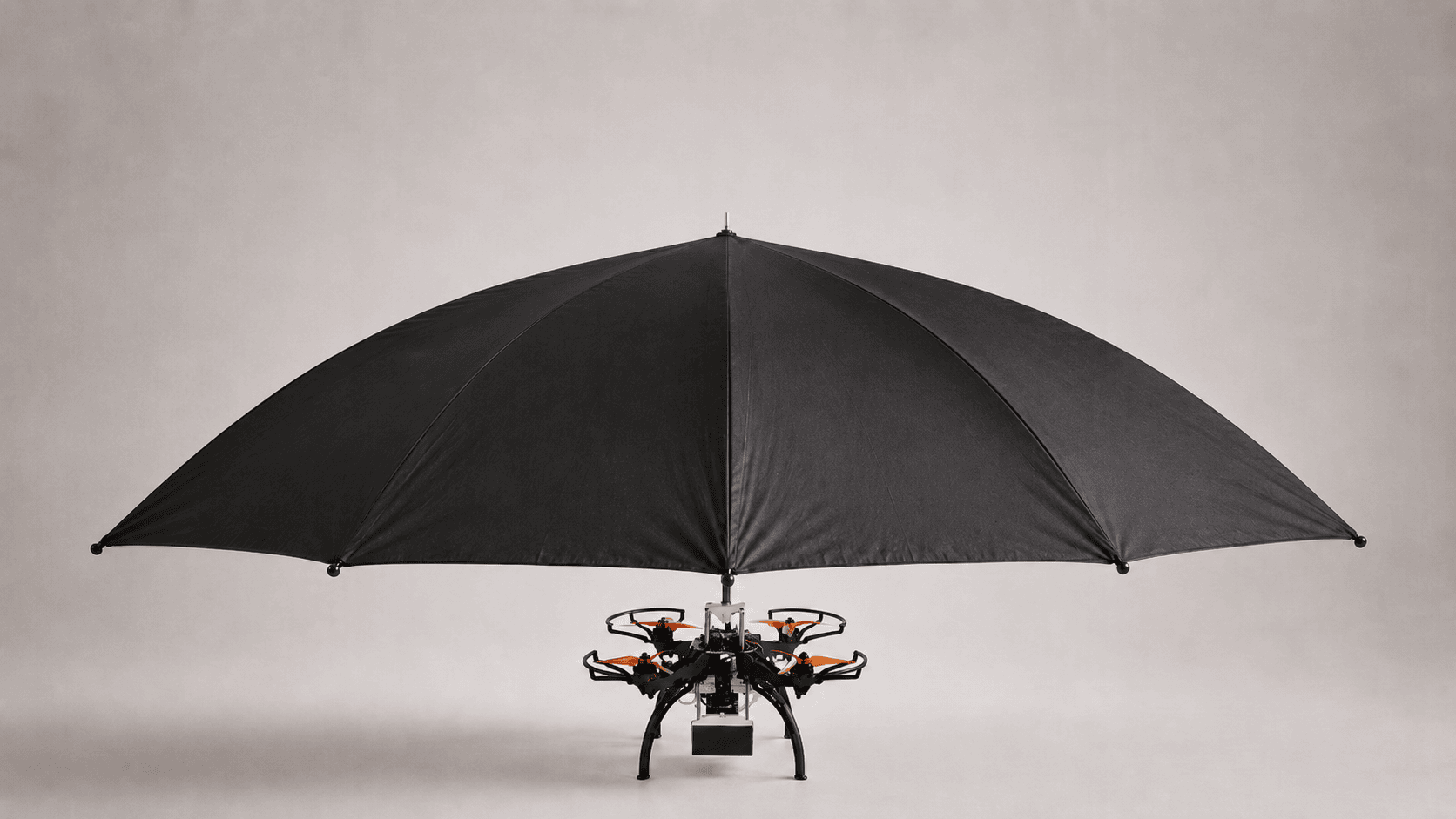
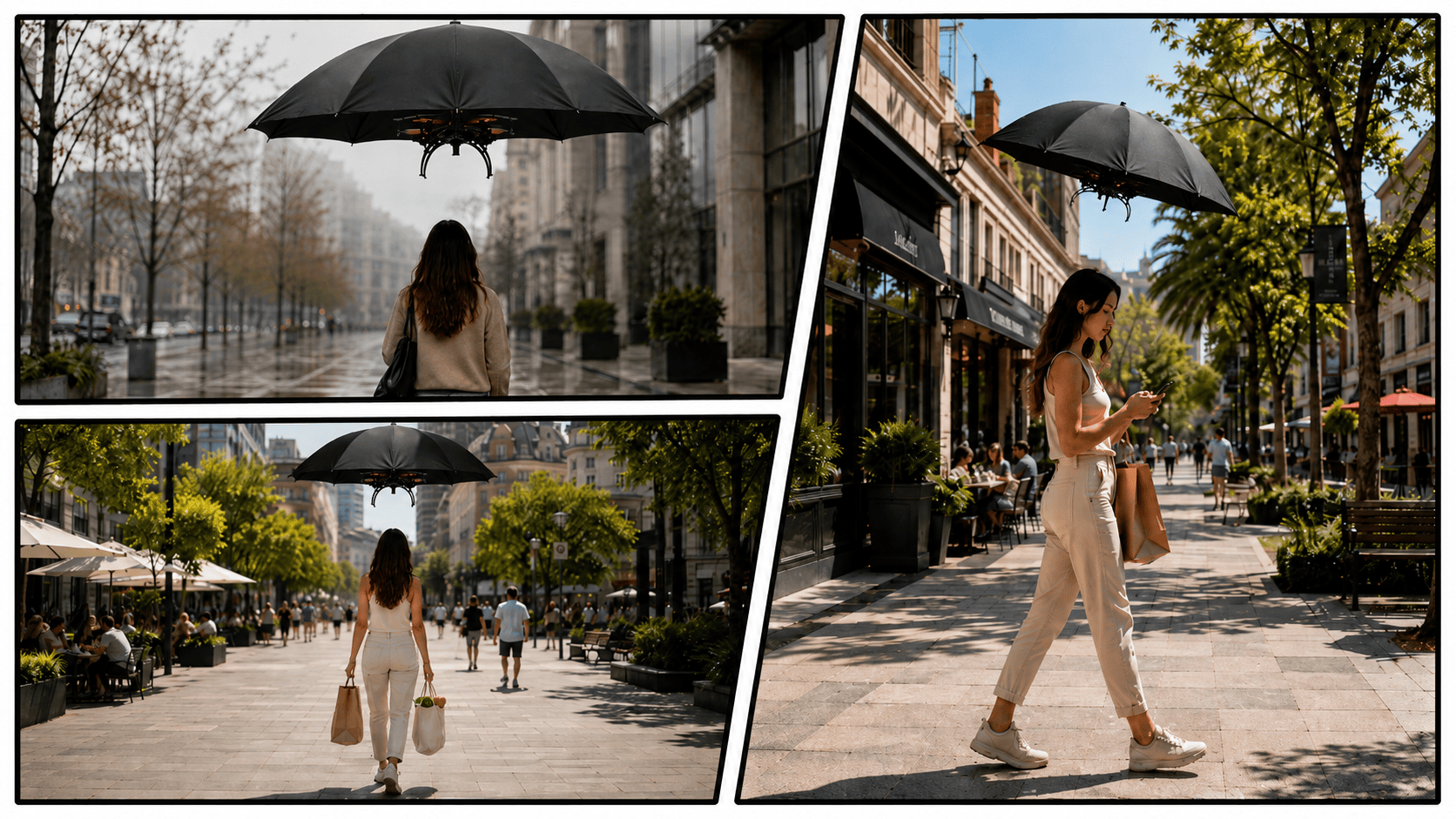
Floating Umbrella is a personal robotic umbrella that hovers slightly behind and above the user and follows as they walk, leaving both hands free. A quadcopter running ArduPilot carries the canopy, while a separate embedded vision board tracks the user and steers the aircraft through MAVLink velocity commands. The prototype went through two build rounds and indoor and outdoor flight tests.
Motivation
The project started on a rainy walk back from the grocery store, with both hands full and the umbrella buried in a backpack. Opening it meant setting something down first, and the bag handoff that followed ended with fruit rolling across the sidewalk.
That small mess turned into a larger question. Why does an umbrella still assume one hand is always available? Floating Umbrella tries the opposite arrangement. Instead of the user managing the object, the object manages its own position.
System
Two build questions shaped the prototype. How can an umbrella hover, and how can it follow?
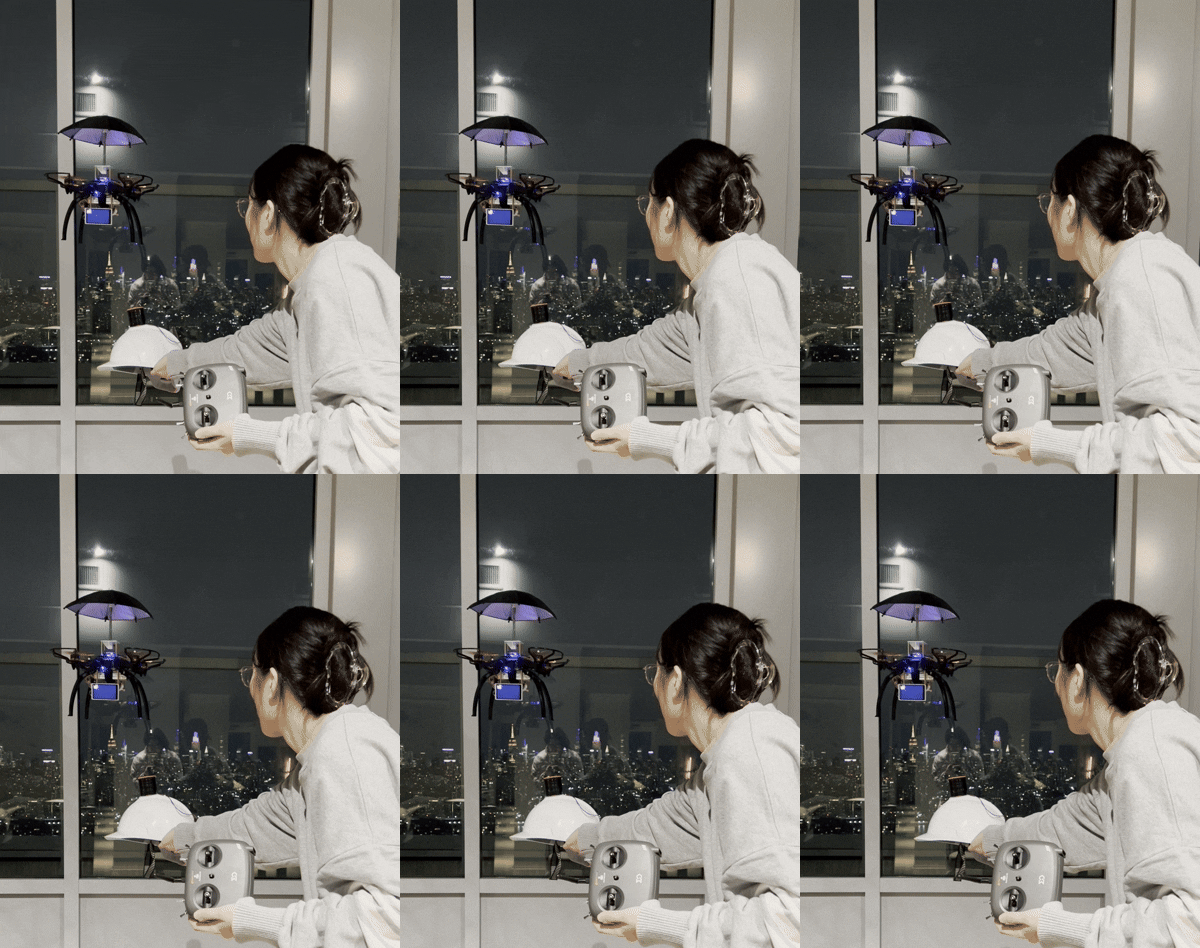
The build went through two rounds. The first focused on the tracking loop, with the camera detecting a marker on a desk and then on a bare quadcopter inside a safety net, so tracking delay and drift could be isolated before adding canopy weight and drag. The second round moved to a larger frame with a canopy socket that lets different canopies attach from above, so a small rain cover and a wider sun shade can be tested on the same platform.
The final platform is a 250-class quadcopter with a MicroAir743 flight controller running ArduPilot, stabilized by optical flow, a rangefinder, and GNSS. A separate LicheePi CanMV K230 board handles vision with its own MIPI camera, so flight stability and person tracking run as independent systems.
Expert Feedback
Once the first version could follow a target, interviews with an accessibility engineer and a robotics engineer set the requirements for the next one. The accessibility engineer's bar was strict. It only counts as accessible if someone gets from their door to their destination without touching it once, because the moment it asks for an adjustment, a hood does the same job with less trouble. The robotics engineer pointed at the failure cases. Wind pushes the frame around, sharp turns and crowds break the camera's lock, and the safety question is what the drone does in the moment it loses you.
Tracking and Control
Those concerns were written into the tracking pipeline. The K230 captures RGB565 frames at 256 by 144, crops a square region, and runs circle detection and red LAB blob detection on the same frame. A target counts as valid only when the largest red blob center sits within 10 pixels of a detected circle center, so color and shape both have to match before anything is accepted. The offset between target and frame center becomes horizontal and forward velocity commands, sent to the flight controller as MAVLink SET_POSITION_TARGET_LOCAL_NED packets over UART at 115200 baud, one packet every 300 milliseconds.
The drone flies slightly behind and above the user, not directly overhead. If tracking fails, the vehicle drifts back rather than falling toward the person. When the target disappears, the system drops the lock rather than chasing a signal that is no longer there.
Flight Testing
Indoor sessions tuned reaction speed and checked how the mounted canopy changed the handling. Outdoor sessions added real walking, wind, and people moving around the user. Across tests the umbrella stayed with its target as it moved, turning what the camera saw into steering. Testing stayed in controlled conditions rather than crowded streets, and obstacle avoidance, stronger target recognition, and weather resistance would need further development.
Outcome
By the end, the umbrella is no longer something you hold. It walks with you as its own small machine, and your hands stay free from door to destination.