2024
Love Utopia
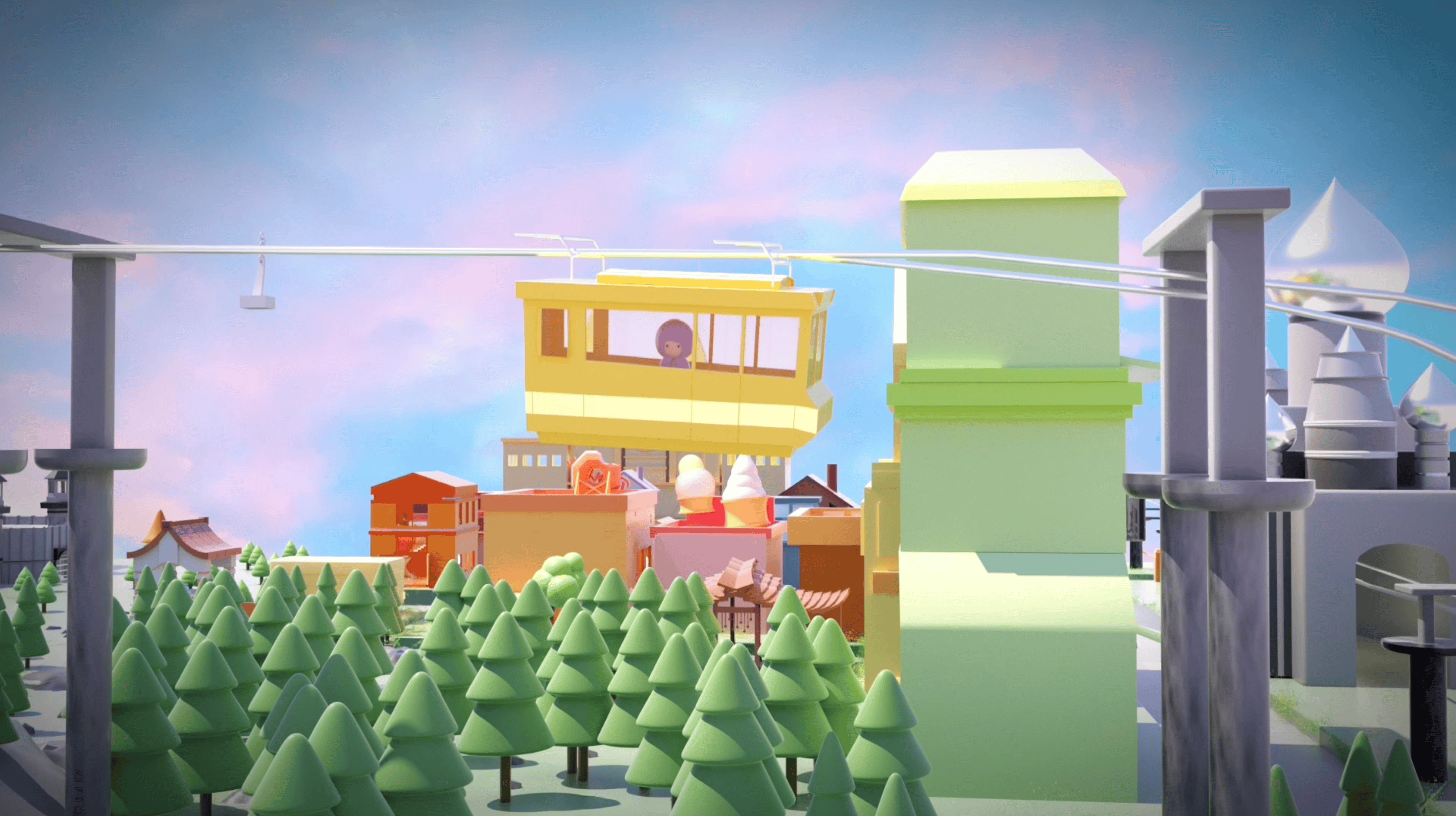
Love Utopia is a narrative RPG set in a town where romance has been reduced to repeatable tasks, countdowns, and coin rewards. Players arrive through the cable car expecting a soft pastel love utopia, then gradually discover that every encounter is timed, unfinished tasks have to be repeated with someone new, and the town becomes harder to move through the longer they stay.
Premise and Formative Research
The project grew from noticing more and more forms of fast-food love in everyday life. People meet, get together quickly, and then separate just as quickly. That pattern felt less like intimacy and more like a social routine, which became the starting point for this satire.
Interviews with 100 people and a questionnaire with 30 responses helped confirm that same contradiction. Many people described short-term romance as unstable or superficial, yet still moved through it in their own lives. Instead of explaining that tension from a distance, the game places the player inside a town built around quick attraction, short dating tasks, and constant replacement.
Game Systems
The game runs as a single-player PC RPG written in C#, set in a mountain town where the cable car is the only way in or out, with an open town layout, four story chapters, and randomized dating tasks connecting arrival to escape. The C# side covers the interaction and event systems, task assignment and countdown state, alarm and arrest logic, save and load, and UI, while Cinema 4D supplied the town model and assets.
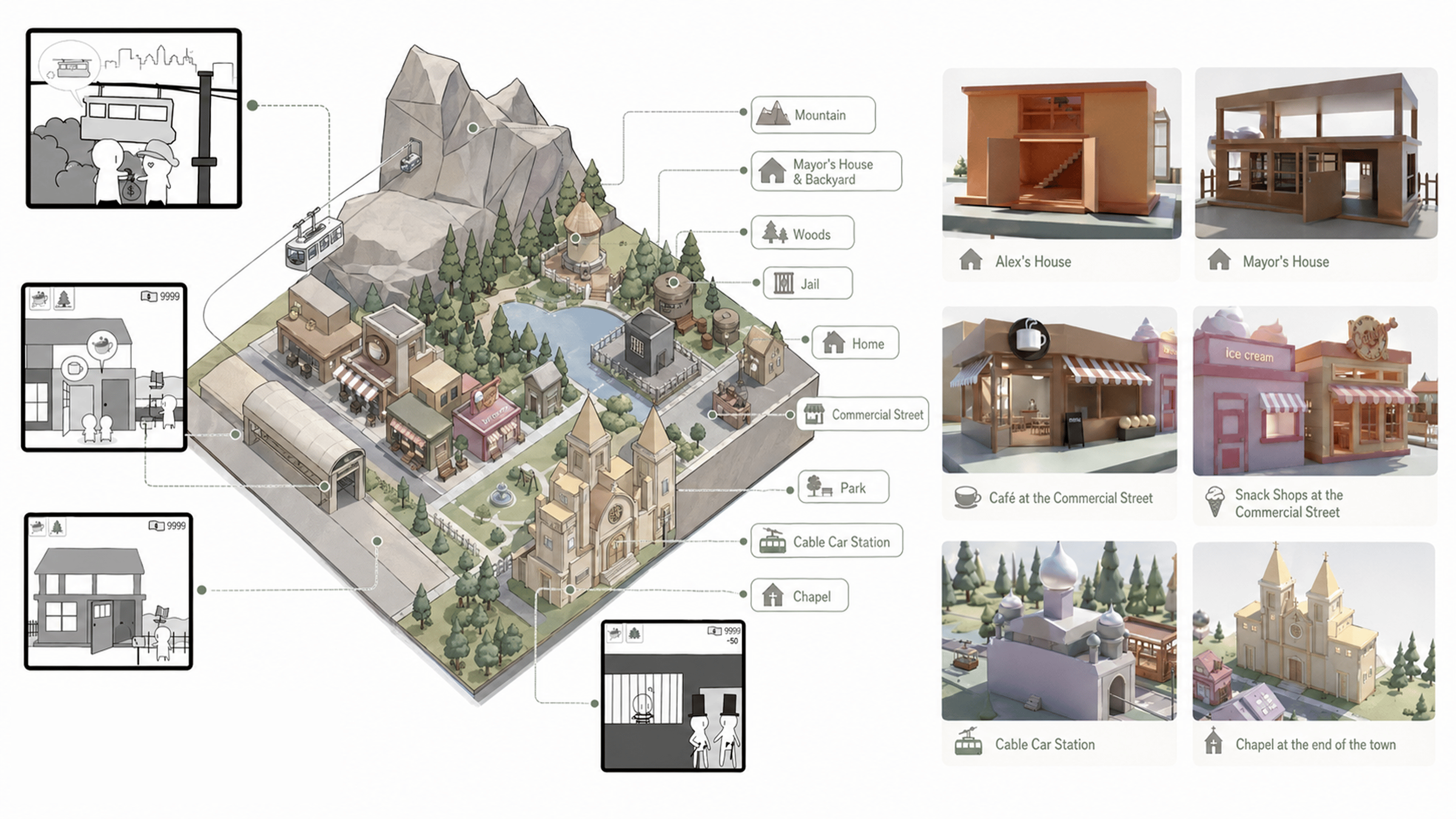
Town Map
Game Flow
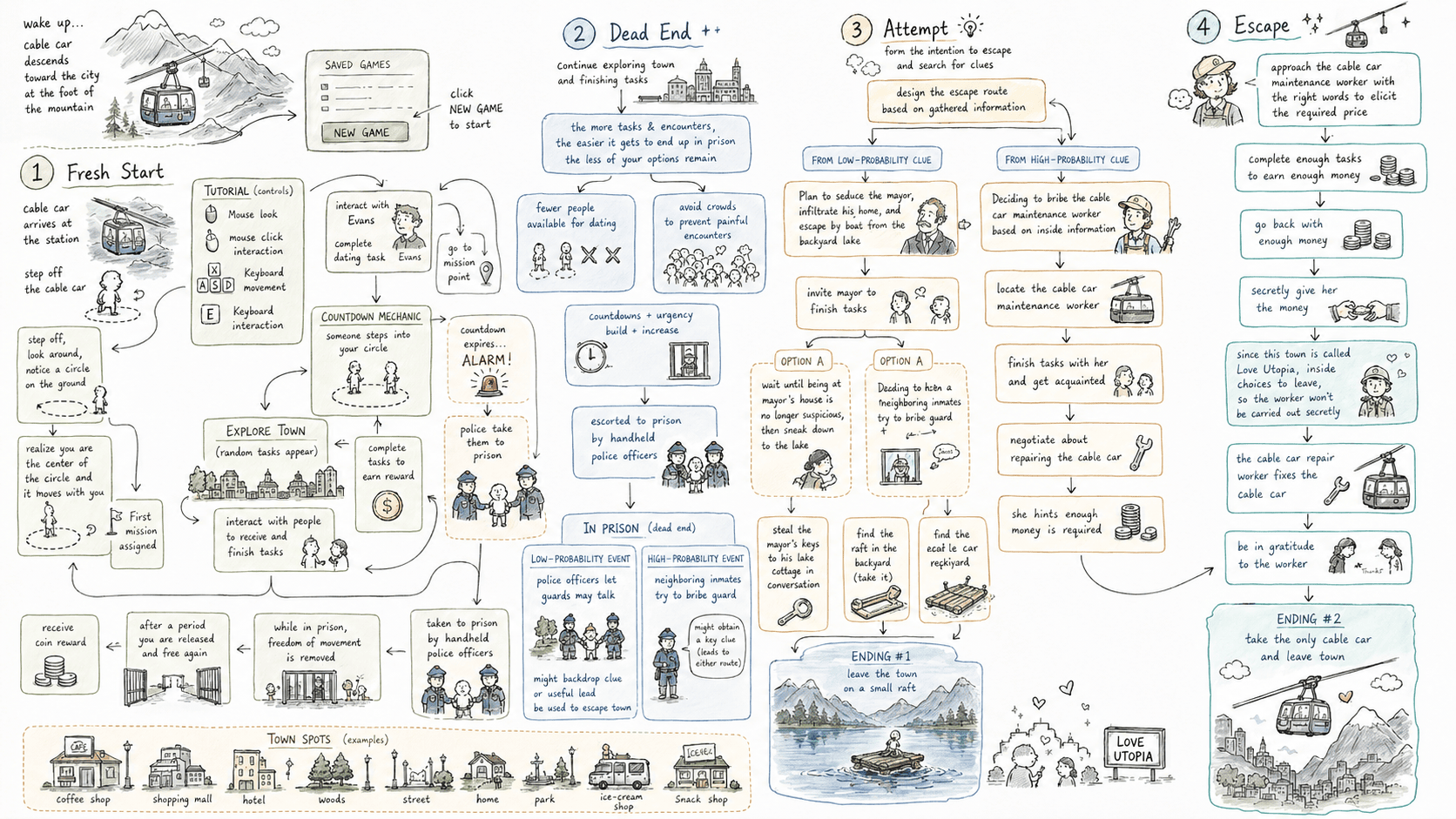
The story moves through four chapters. Fresh Start brings the player into the town and teaches its dating rules. Dead End is where that routine stops working. Repeating tasks leaves fewer people available, alarms become easier to trigger, and prison makes it clear that staying inside the system leads nowhere. Attempt begins once the player decides to leave and starts collecting clues, money, and possible routes. Escape turns that plan into two endings, one by raft through the mayor's backyard lake and one through the cable car mechanic.
Task Economy
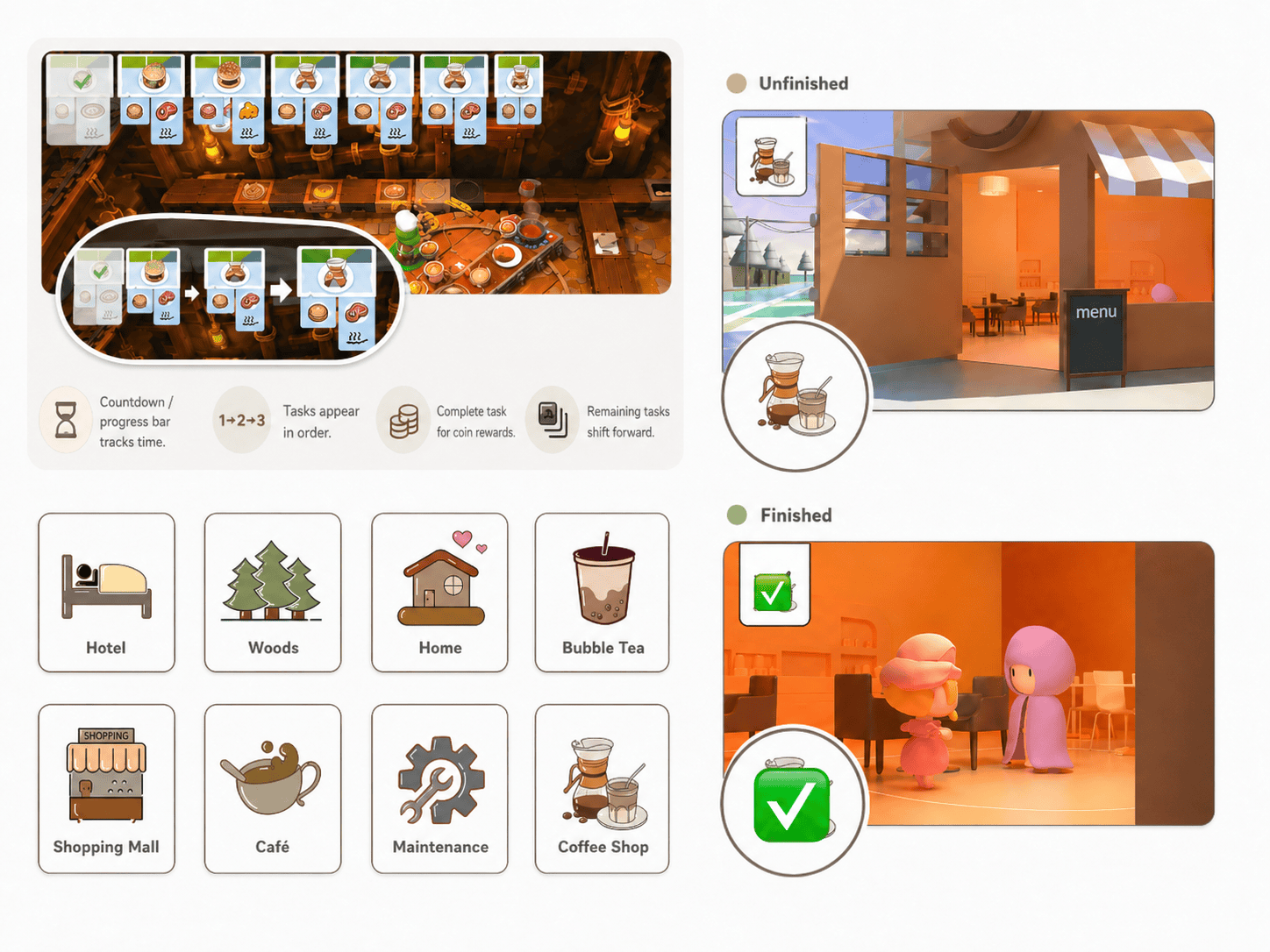
The task interface was developed as part of the town's social system rather than a neutral game menu. Its structure was inspired by the task logic in Overcooked, where requests appear in sequence, stay visible under time pressure, and change the pace of play as they accumulate.
In Love Utopia, finishing a task gives the player coins. Different task types, their icons, the countdown bar, and the unfinished or finished states all work together to make dating feel procedural, visible, and repeatable.
In-Game System
Once the player enters town, romance is introduced as a task economy. Small dating-related jobs earn coins, and the rules of the town are explained as part of everyday play rather than as a separate moral lesson.
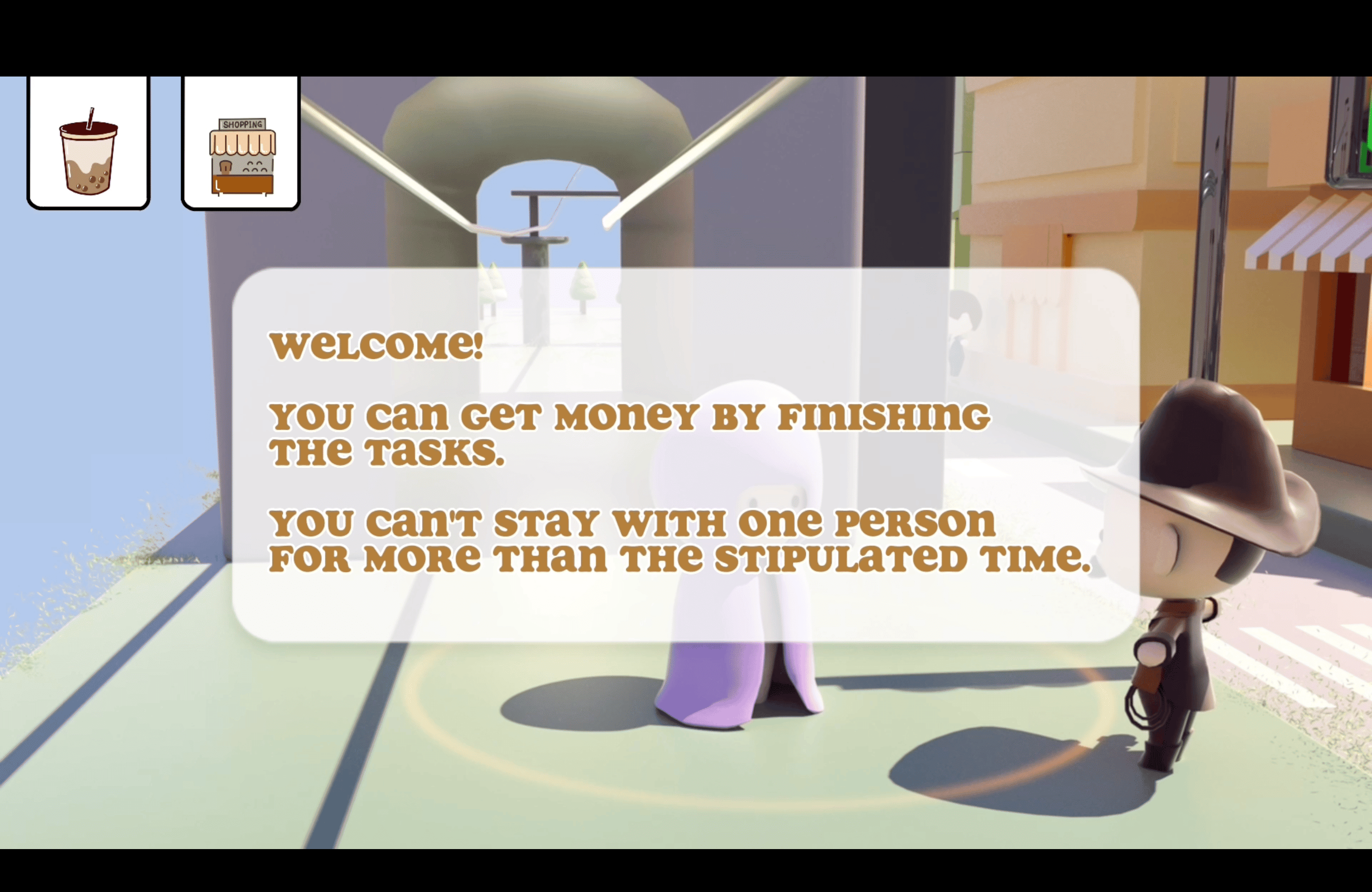
Rule Tutorial
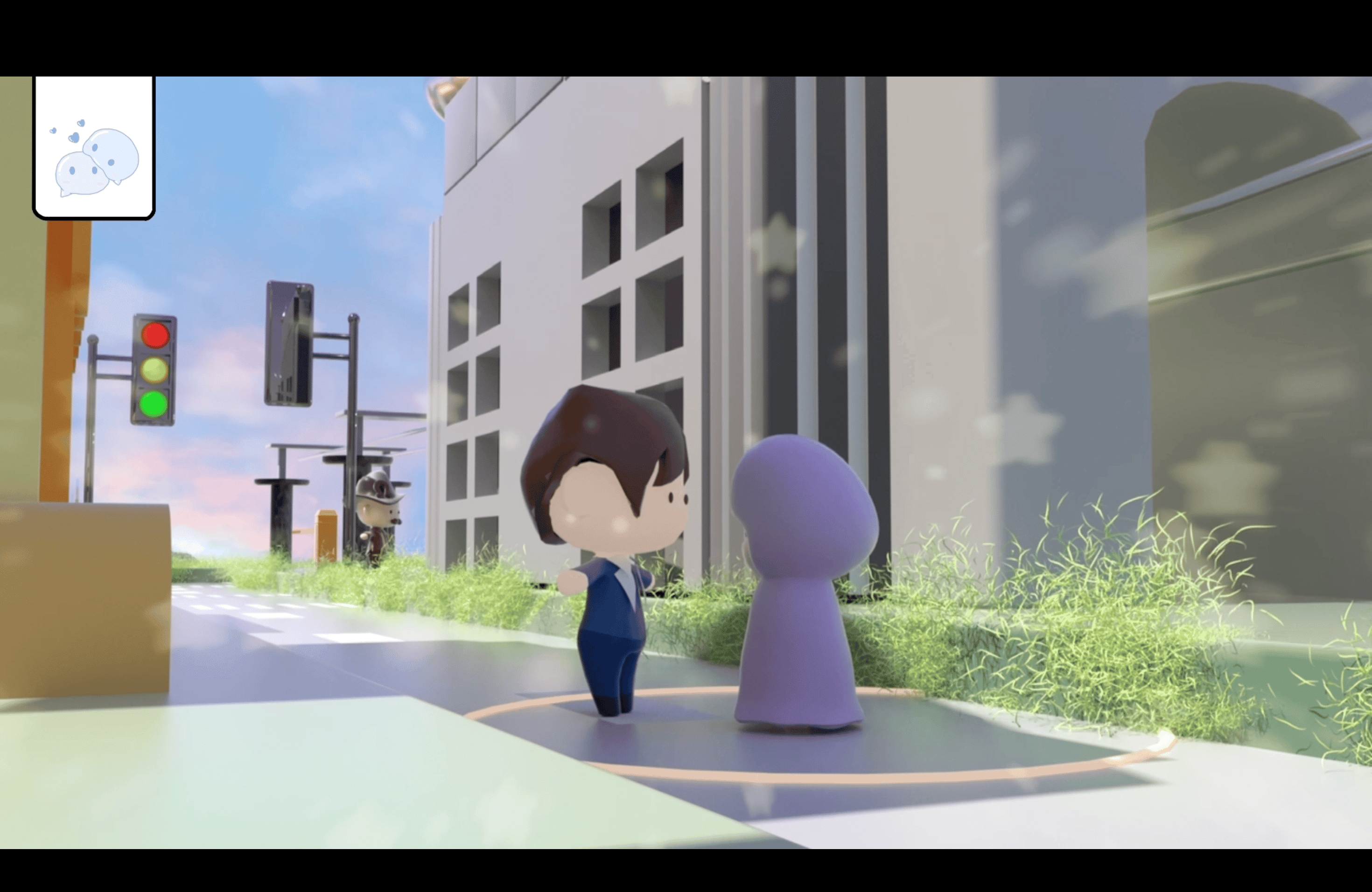
Live Encounter
Each character carries a circle, and entering that circle starts a separate countdown for that relationship. When a timer runs out, the player can no longer stay with that person. If a task has not been finished in time, it has to be started again with someone else. Ignoring the limit triggers an alarm and the police take both people away. As more characters become unavailable, the player starts avoiding contact, moving through town more carefully, and eventually looking for a way to escape.
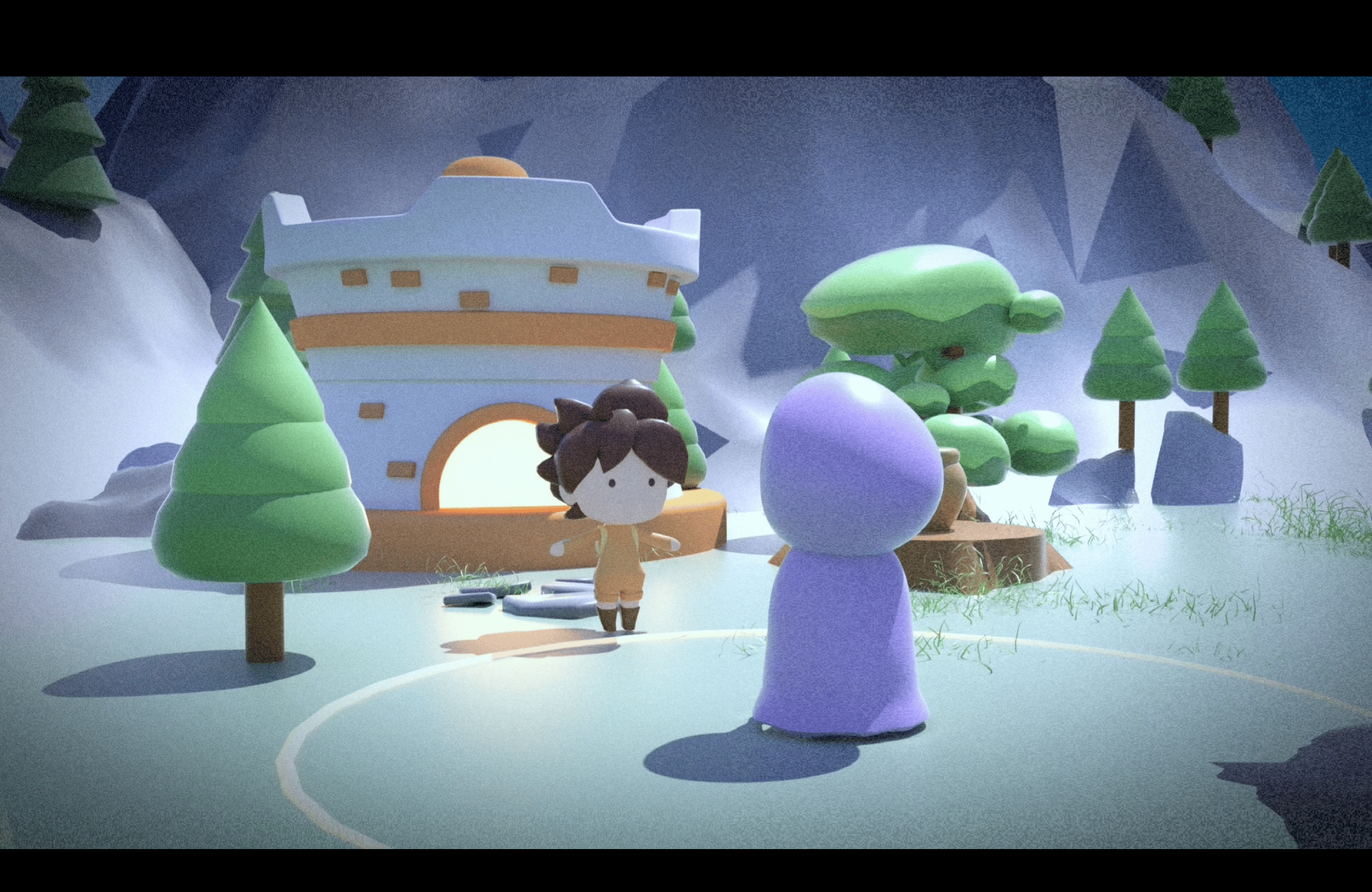
Cable Car Route
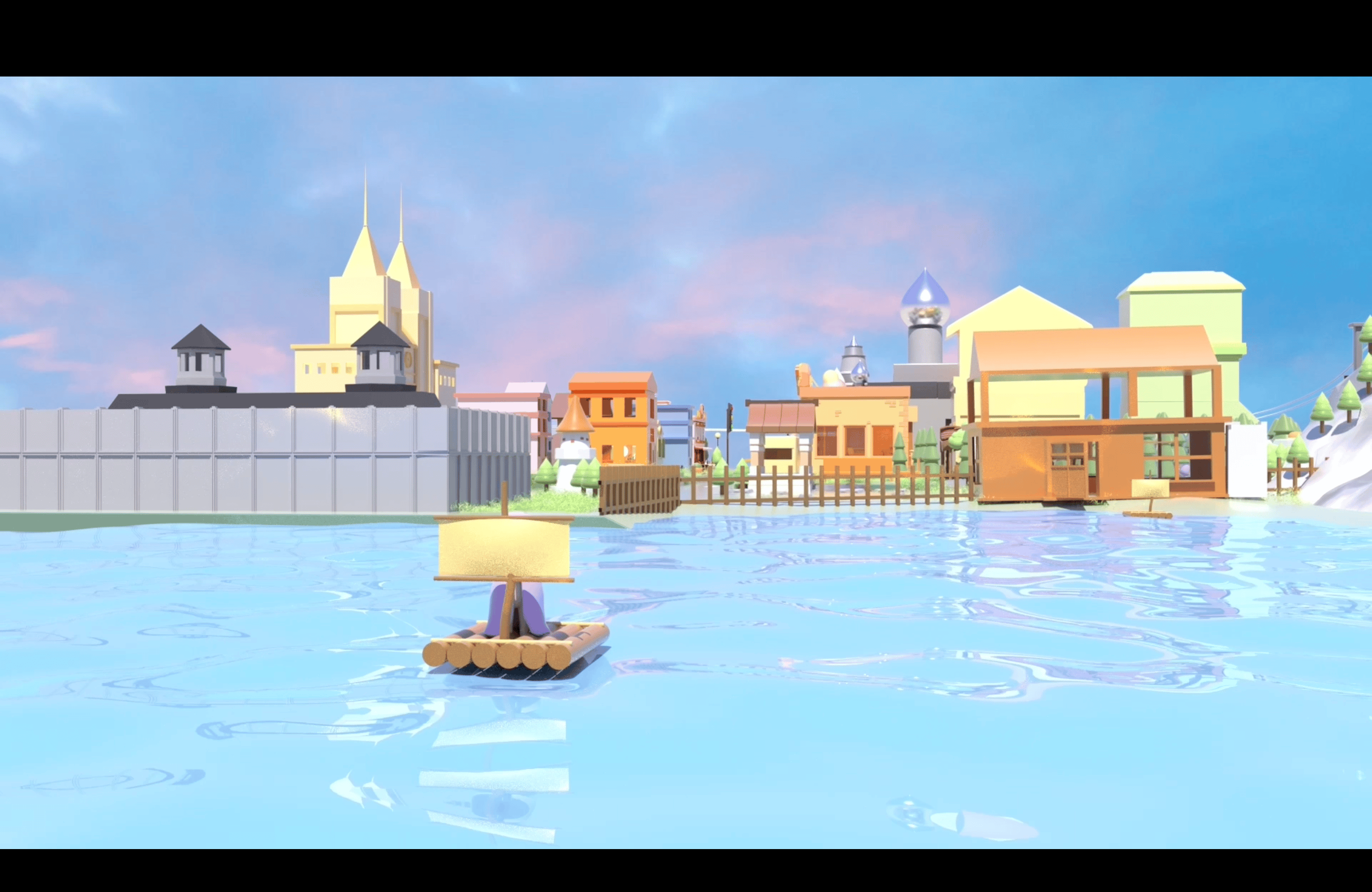
Raft Route