Scentverse
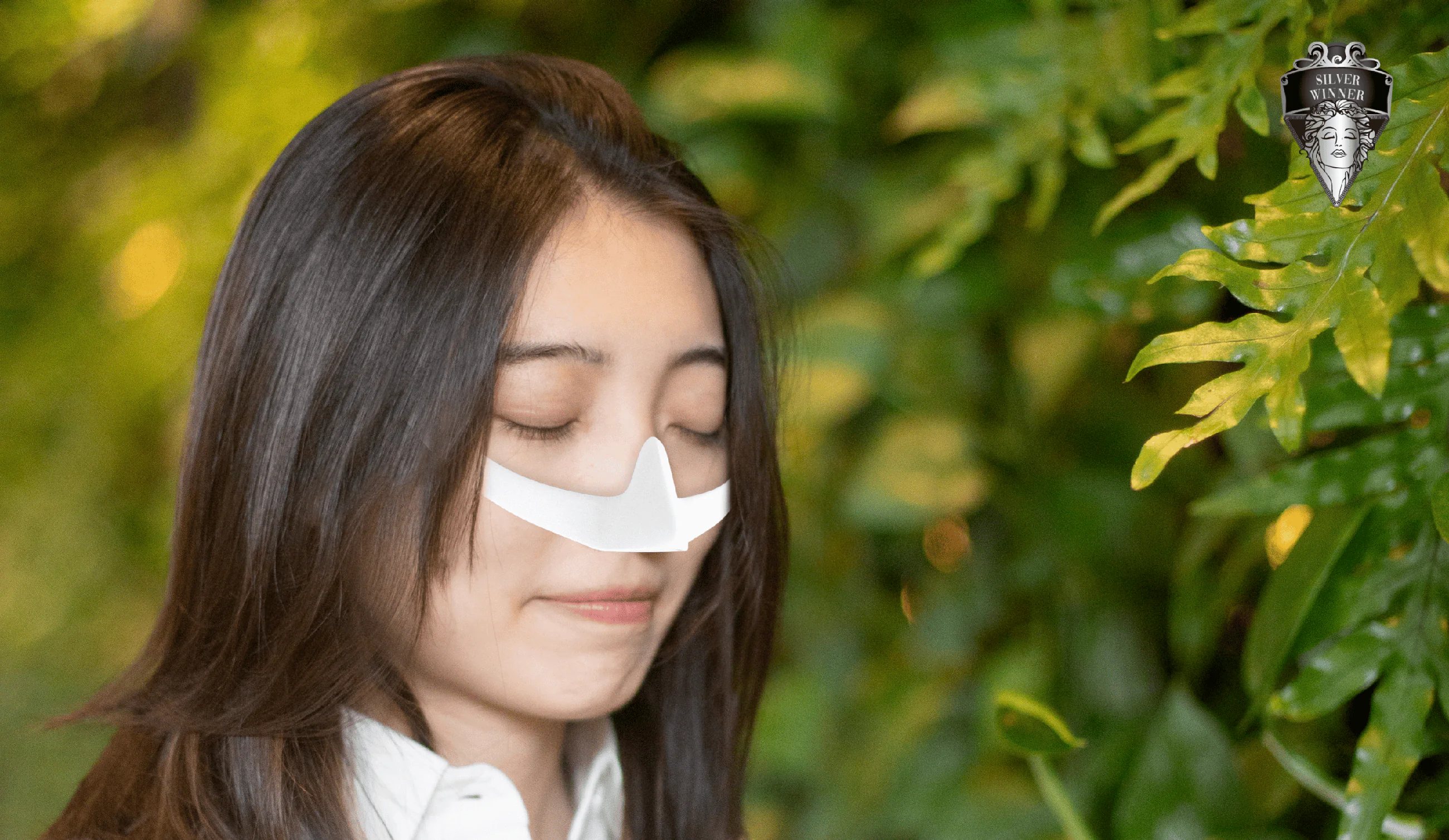
A wearable and companion app that explores how scent-based moments could be captured and shared across distance.
Background
Smell is one of the few parts of an experience that still cannot be shared online. A familiar scent can bring back a place, a person, or a specific moment almost instantly. In my survey, most respondents described this connection, and many had already tried to share a smell through text or images. They could explain where it came from, but the other person still could not experience it.
Research Findings
I combined a 45-response survey with four expert interviews and synthesized 132 observations into three design requirements.
Description
People found it difficult to describe scents clearly and accurately with words alone.
Comfort
The wearable had to stay light and comfortable on the face.
Safety
The stimulation method needed to be safe and reproduce scents accurately.
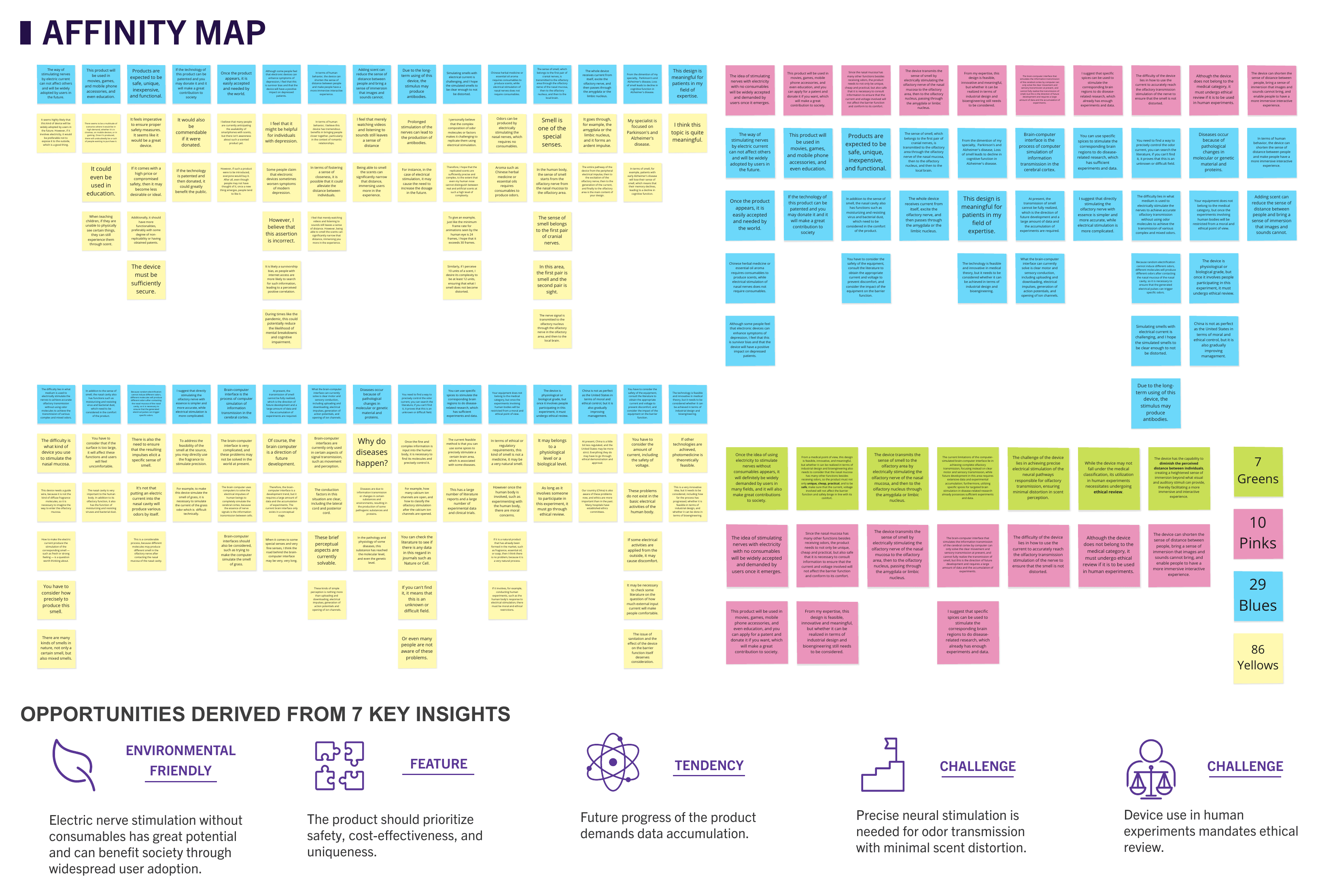
Affinity map
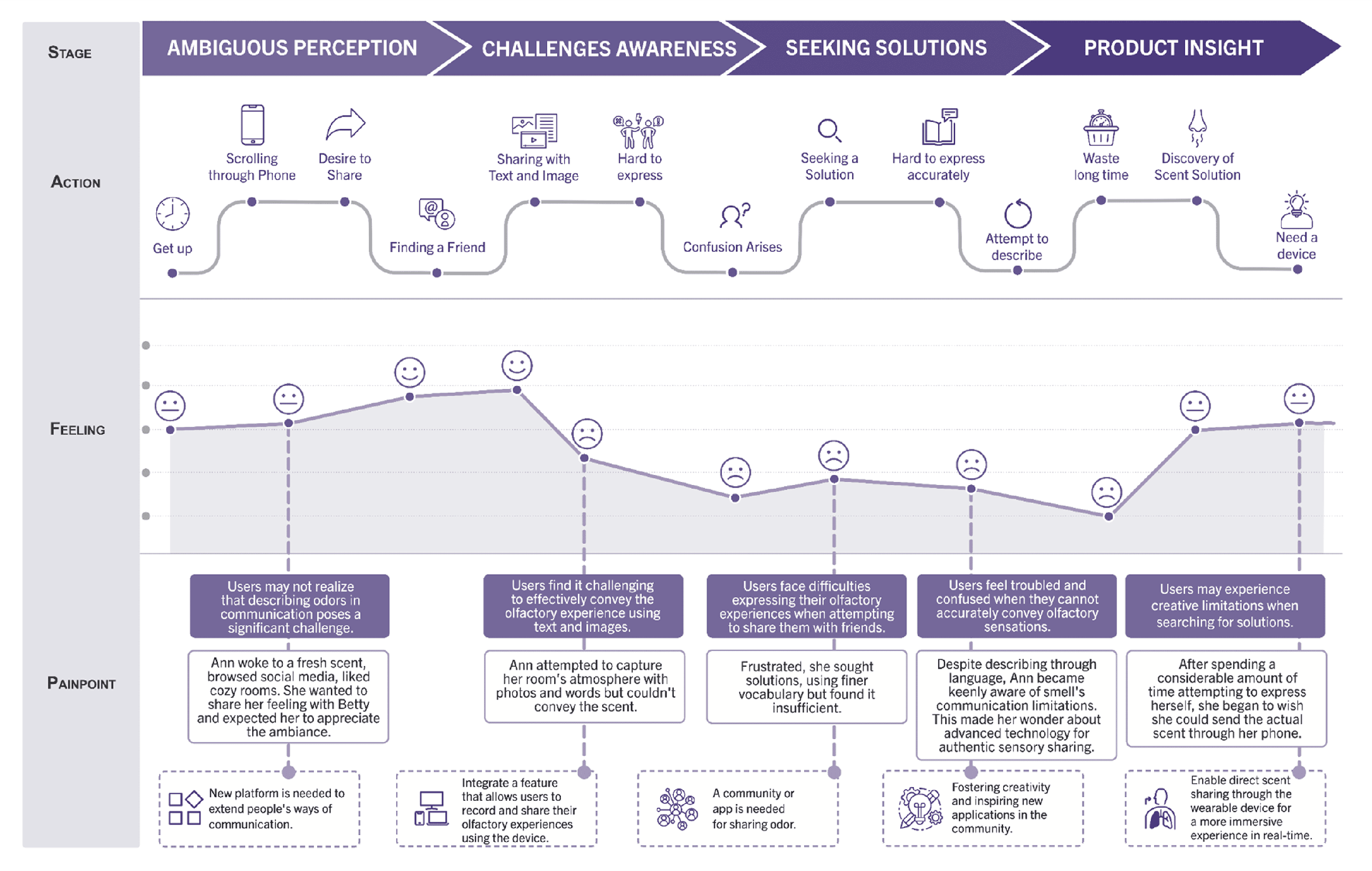
User journey map
Technology Comparison
I compared two methods for recreating a scent during playback. Aroma cartridges release prepared scents, but each scent requires a matching formula and refill. Electrical stimulation removes the need to store scent materials and could reduce the size of the wearable, although the method remains experimental.
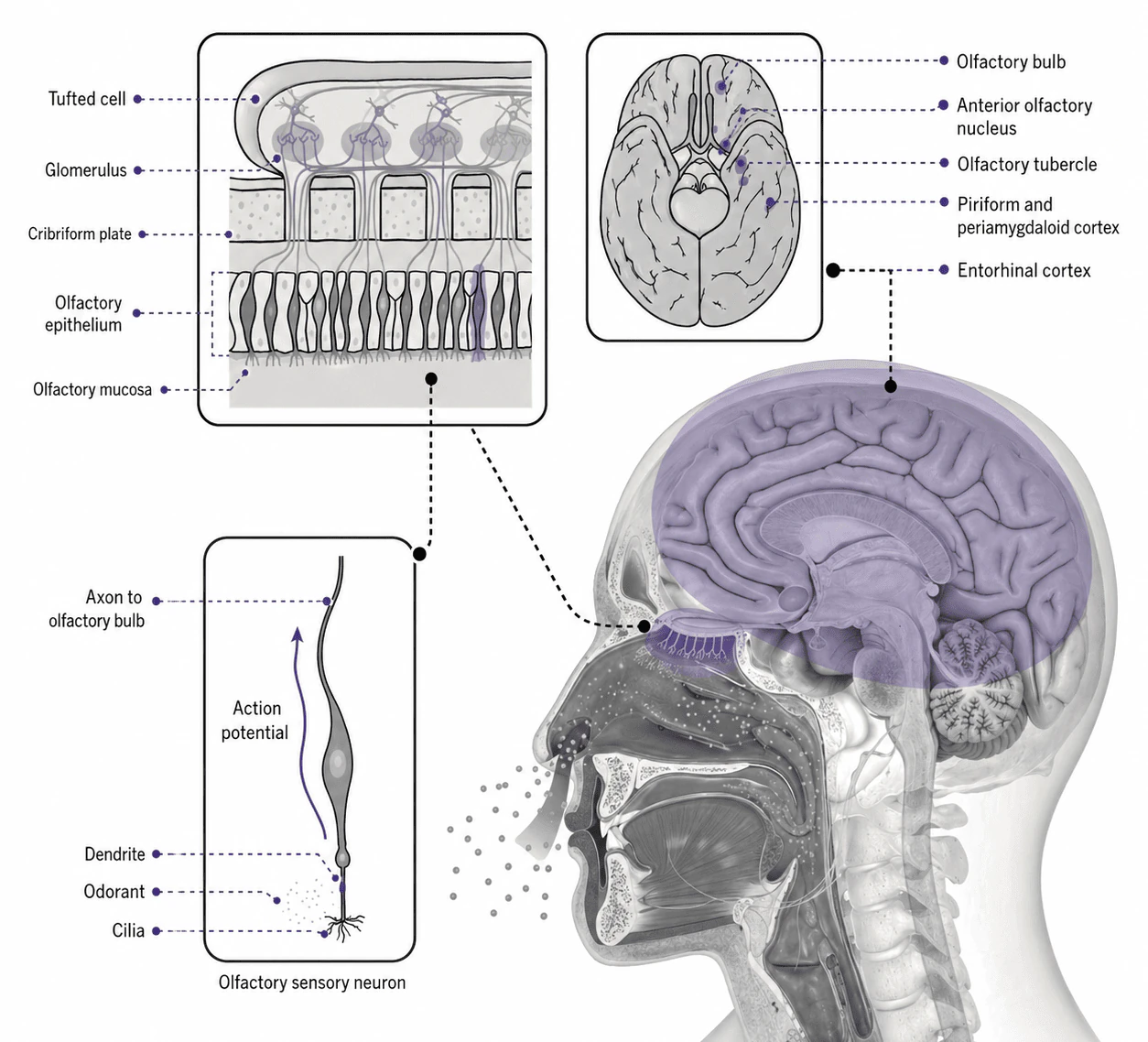
| Criteria | Aroma cartridges | Electrical stimulation |
|---|---|---|
| Device size | Requires space for cartridges | Could use smaller components |
| Refills | Required | No aroma refills |
| Scent library | Limited to prepared formulas | Not tied to stored formulas |
| Feasibility | More established | Experimental |
| Safety testing | Material and exposure testing | Electrical safety and individual calibration |
| Maintenance | Refilling and cleaning | Calibration and electrode care |
Decision
I selected electrical stimulation as the speculative direction because it better matched the intended low-waste, wearable experience. The project did not validate the stimulation mechanism, so the remainder of the work focuses on the interaction model and product form rather than claiming technical readiness.
System Overview
The journey map showed that the friction was never posting content. People already share photos of a good meal. The smell cannot travel with the post. So the loop splits across two devices. The wearable captures and replays, and the app adds context and sends.
Form Exploration
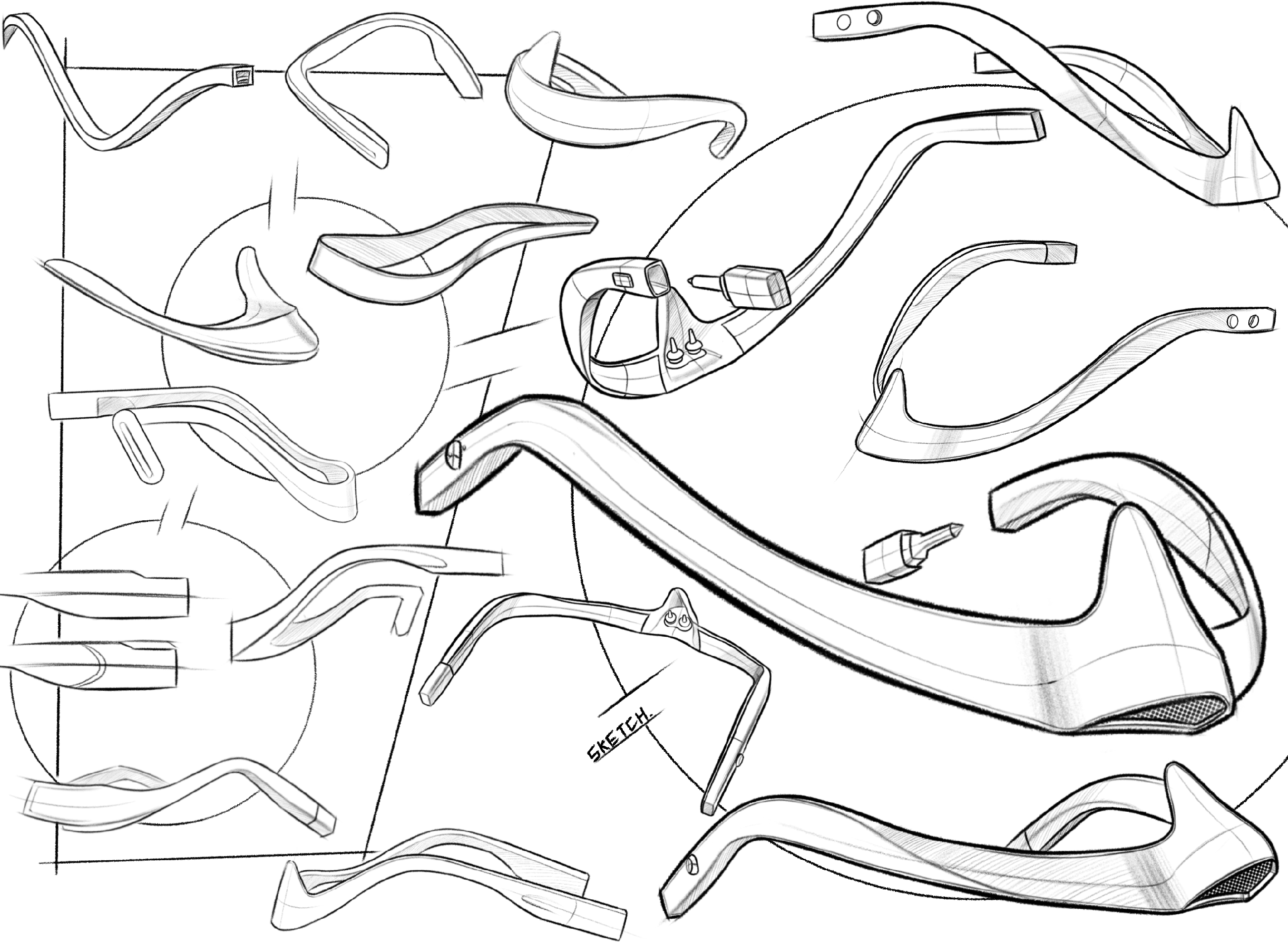
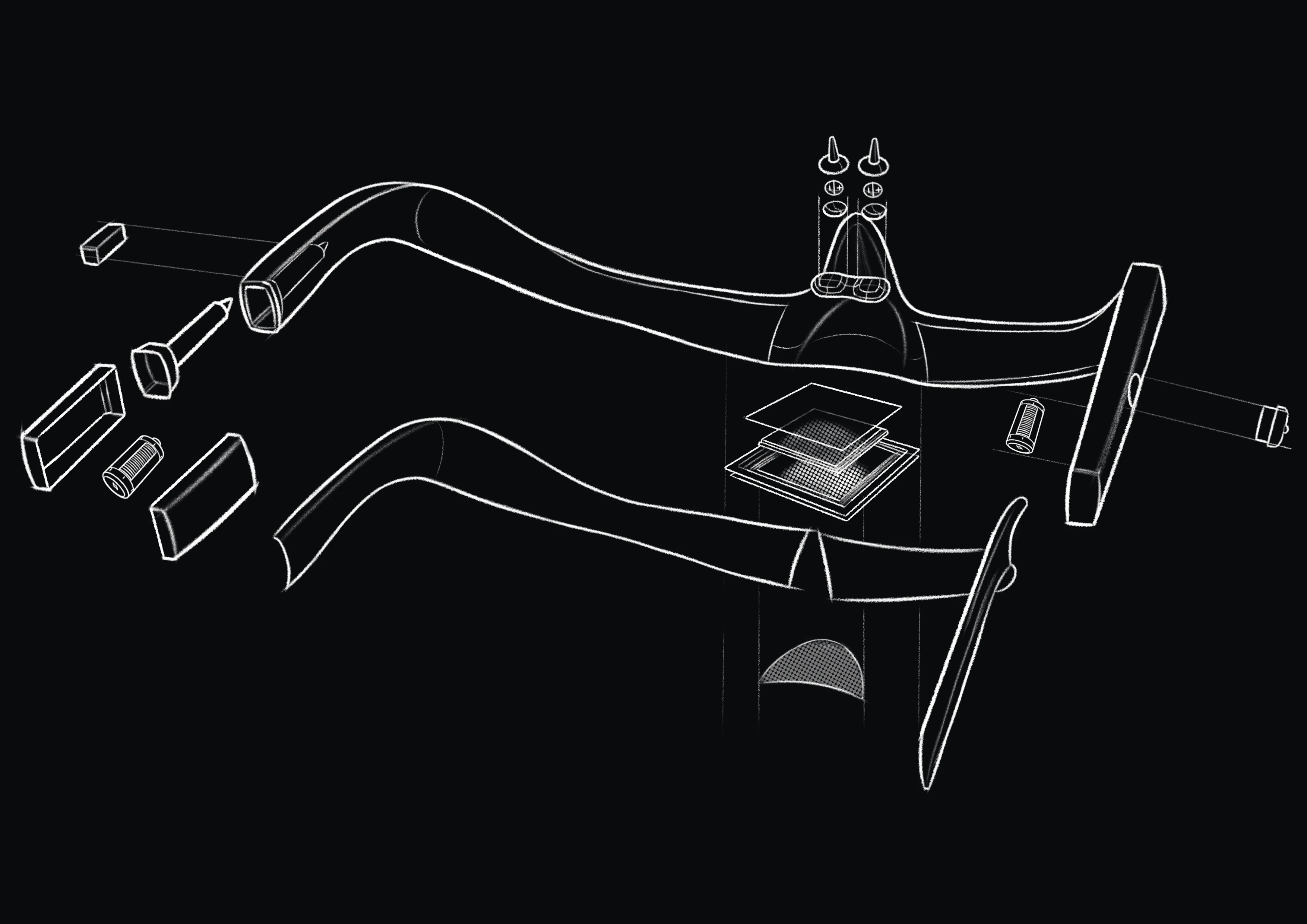
The device had to hold a scent sensor, a detachable collection unit, battery, chip, Bluetooth module, and the microcurrent release heads, while staying light on the face. I evaluated each direction against six criteria.
- weight distribution
- one-hand removal
- nose clearance
- component volume
- social acceptability
- off-face capture
Early concepts placed most of the hardware near the center of the face, which would make the device feel front-heavy. Moving the battery and electronics toward the cheek and ear spreads the weight across a wider support area.
The sampling module detaches from the frame so it can be brought close to a drink, fabric, or other object without moving the entire wearable. After capture, it reconnects to the frame for playback.
Form sketch
Exploded view
App Design
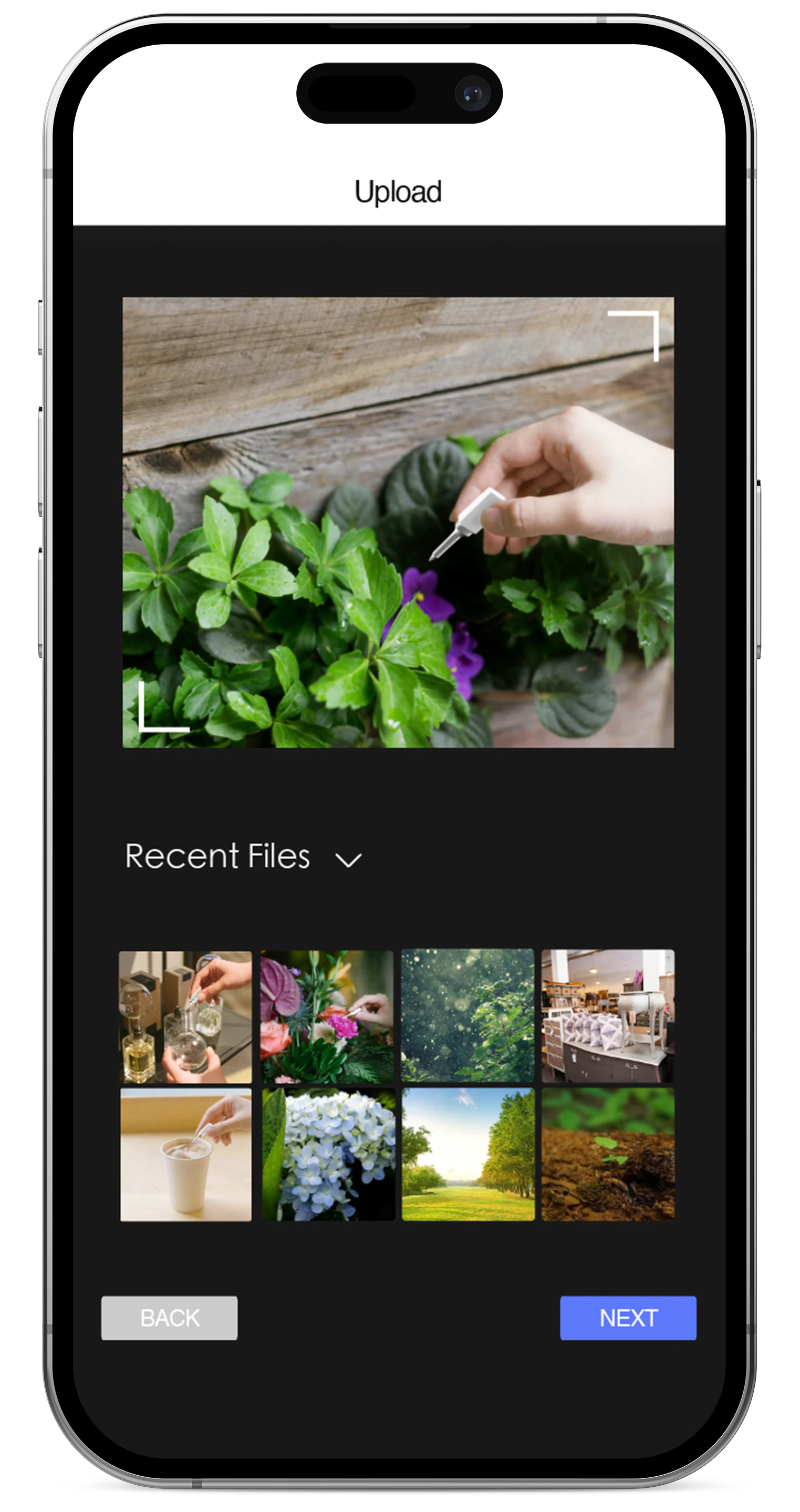
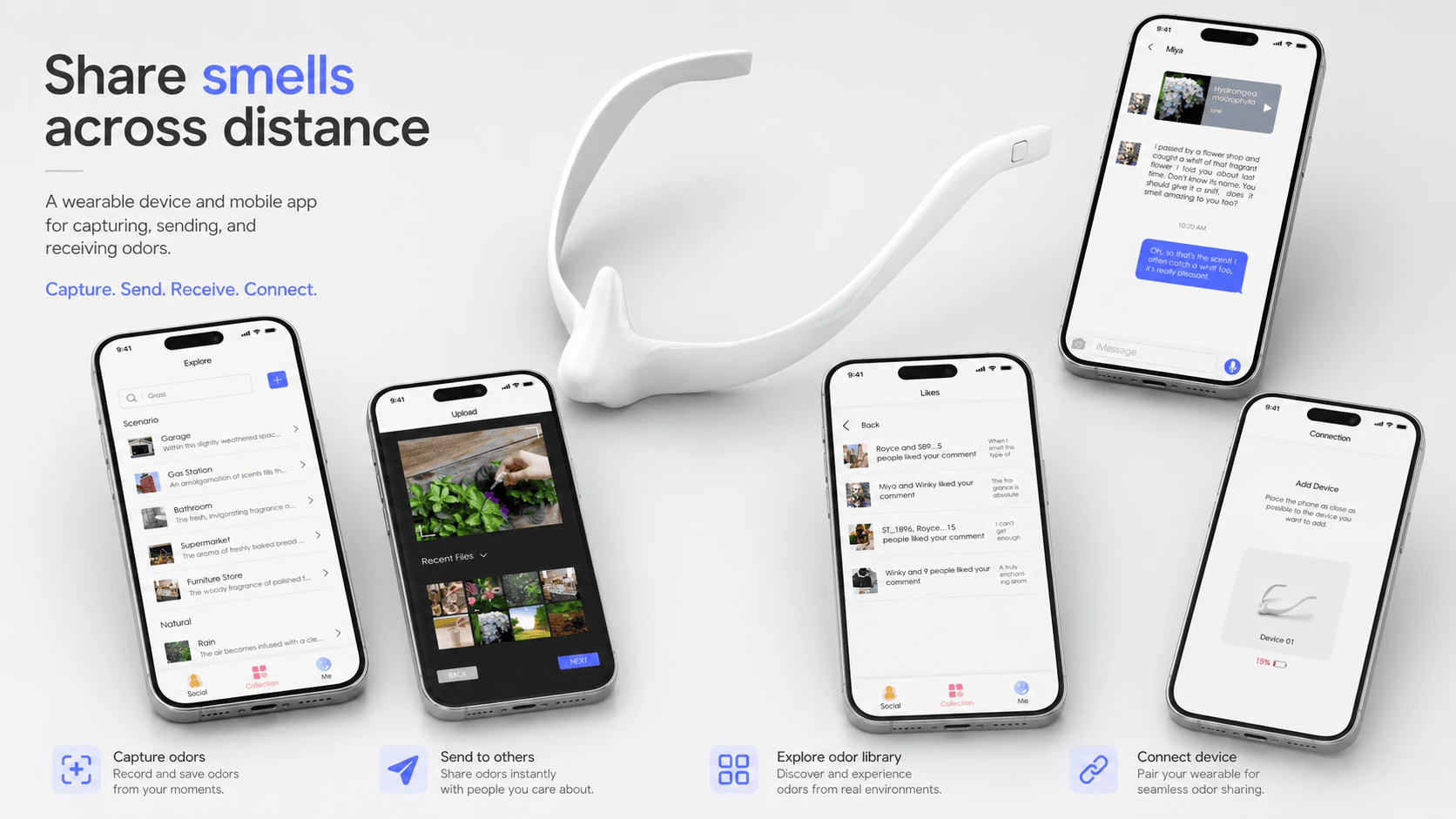
The wearable handles scent capture and playback. The app stores each recording with a photo, note, and location, then lets users send it privately or add it to the scent library.
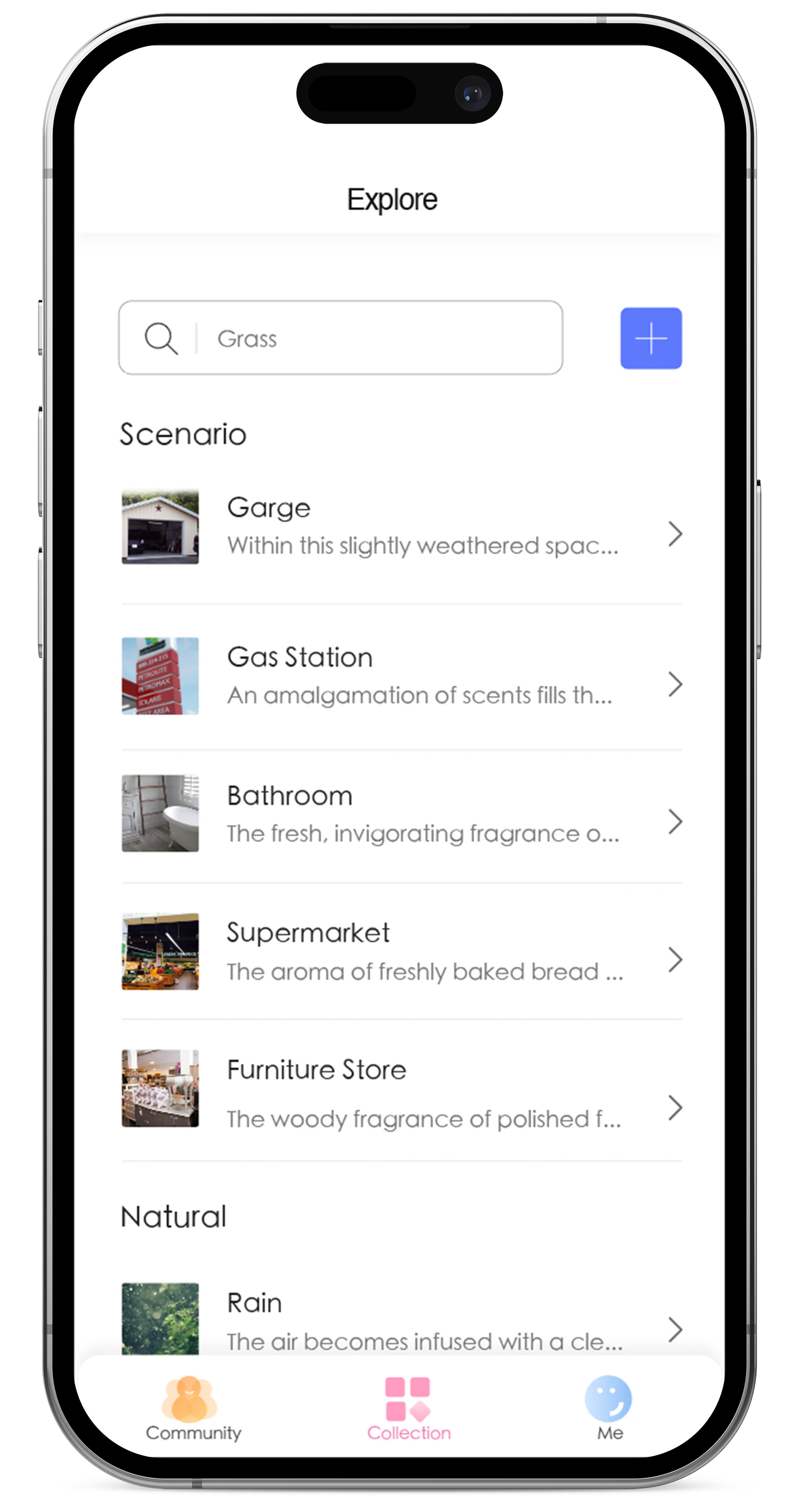
The library is organized by place, with categories such as rain, supermarkets, gas stations, and furniture stores. Private messages keep one-to-one sharing separate from public posts, while the device page connects the wearable for playback.
Browse the scent library
Add context
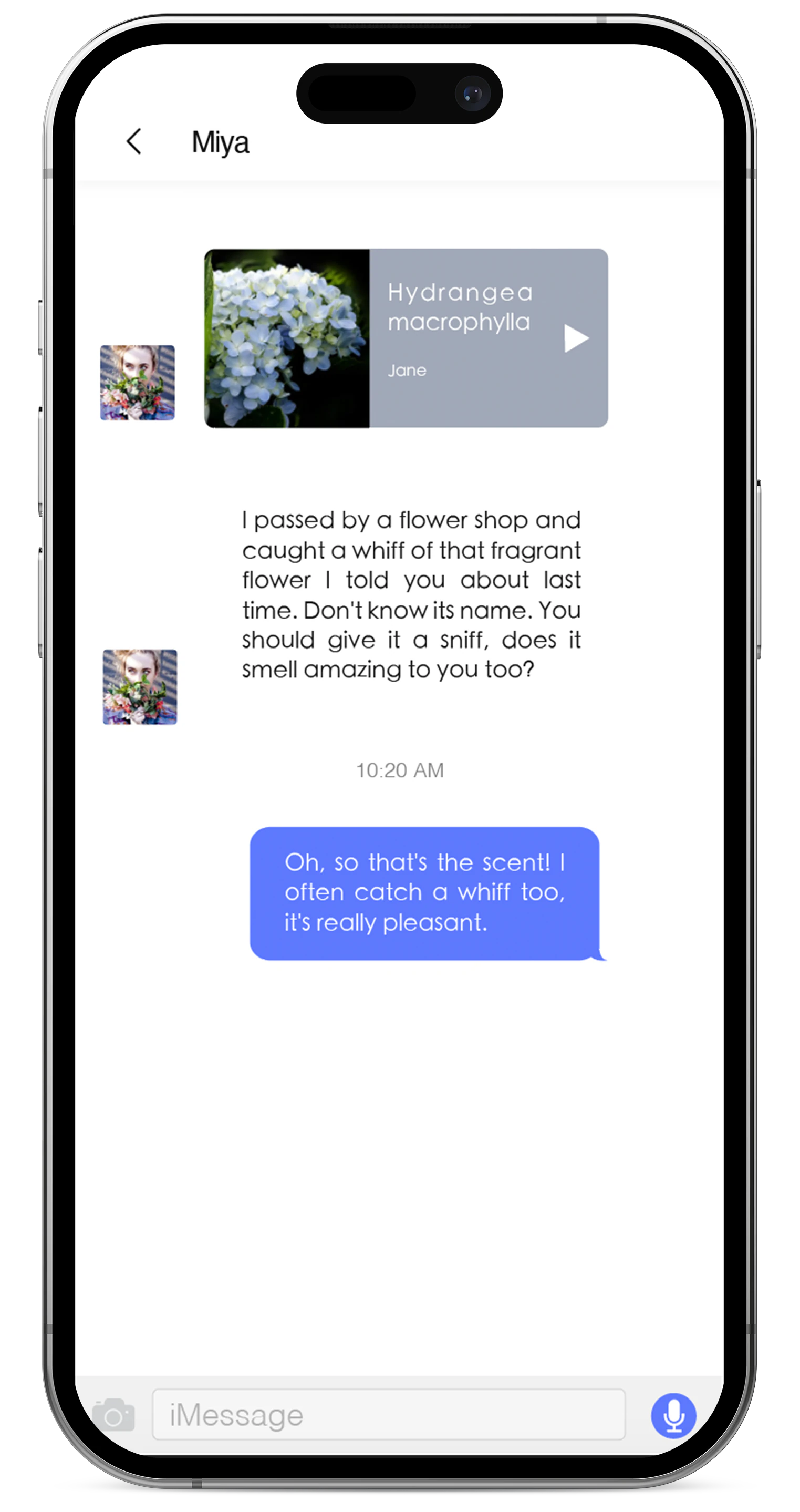
Send privately
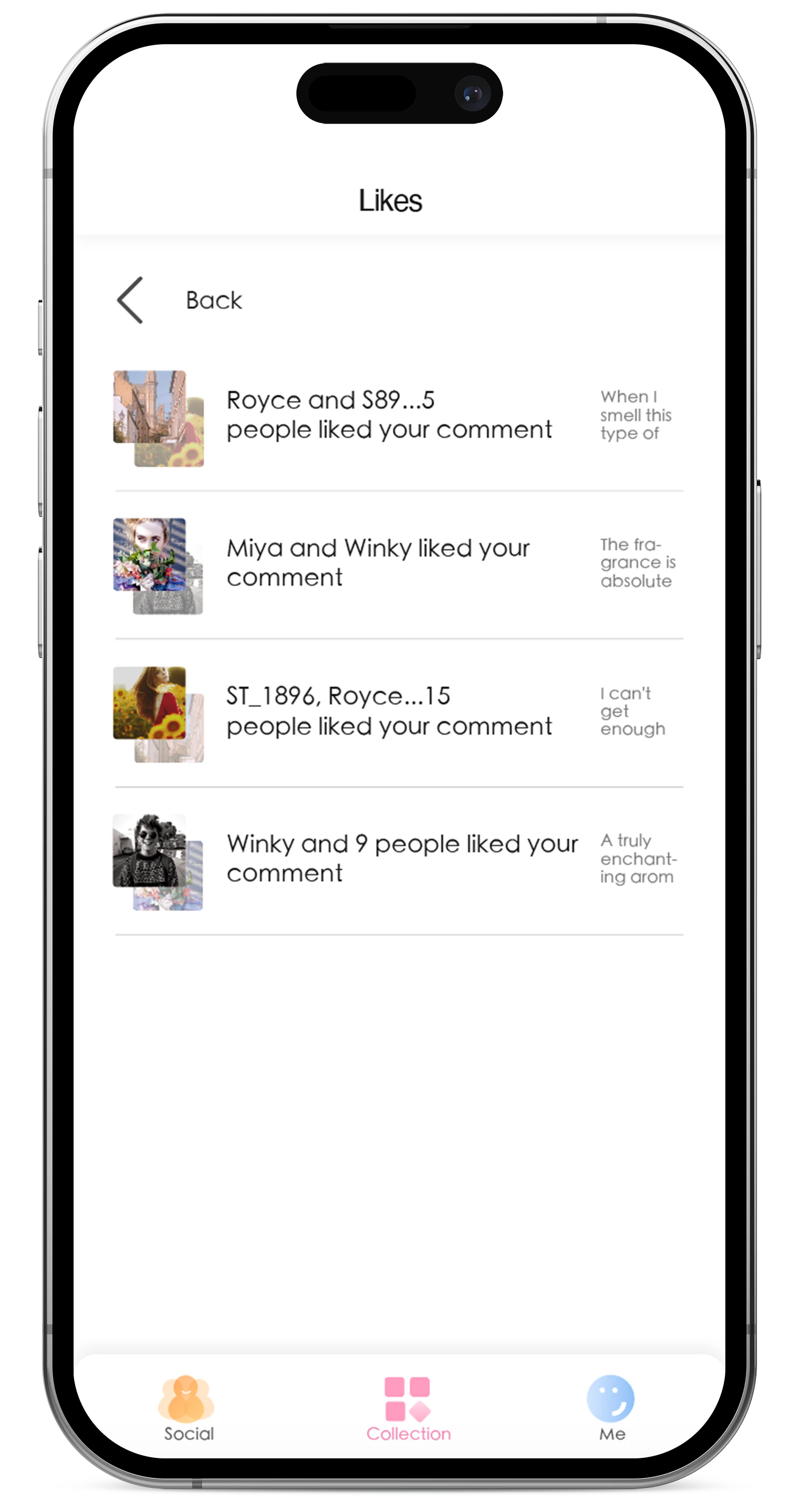
View reactions
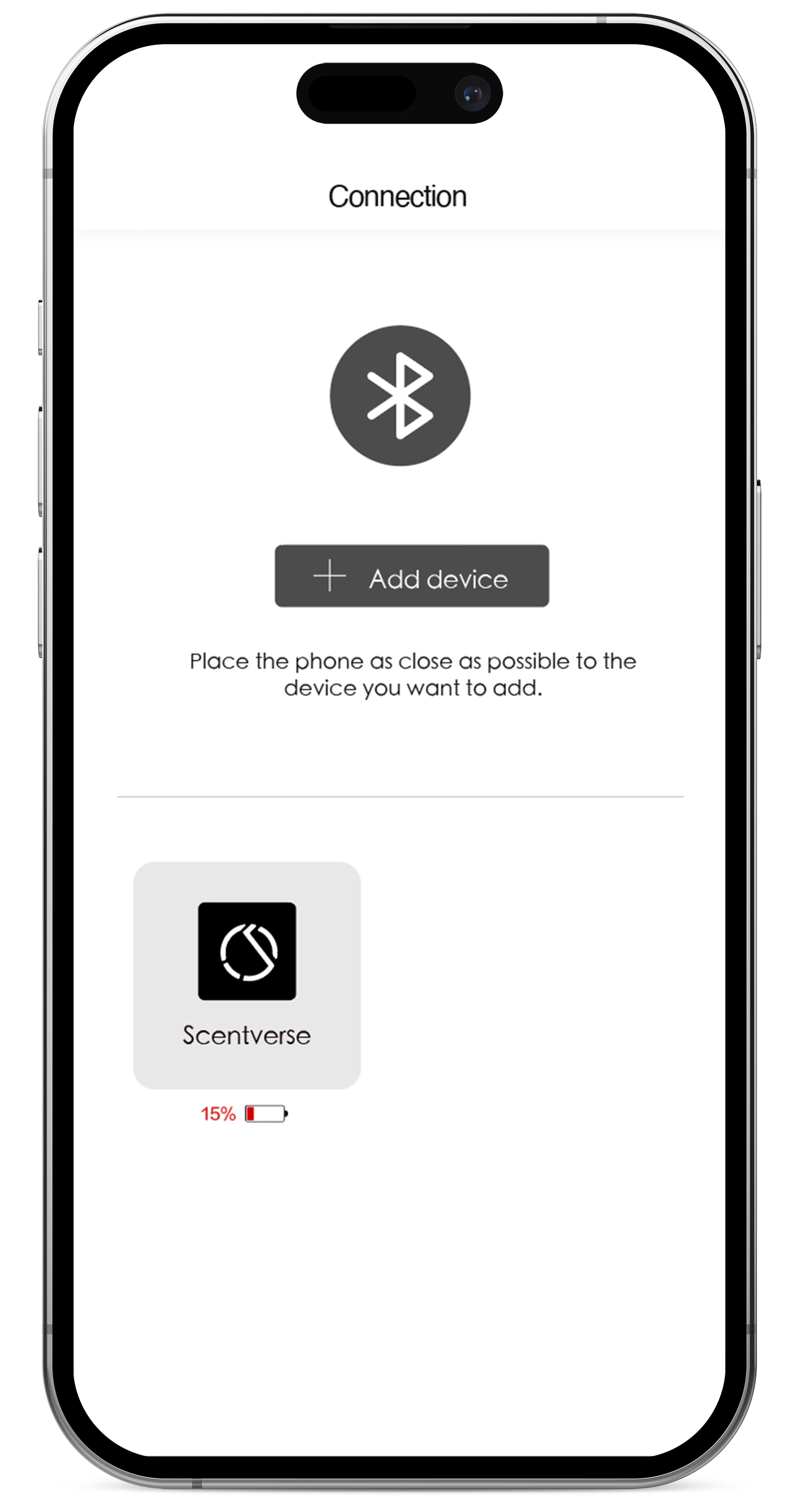
Pair the wearable
Outcome
Scentverse brought the wearable, mobile app, and sharing flow into one product concept. I completed the system flow, wearable form, component layout, and a clickable mobile prototype. The project received a Silver Award in Wearable Technologies at the Muse Design Awards.
The work covered the experience and product concept but did not validate scent sensing or nasal stimulation. Further development would require hardware prototyping, safety review, and controlled user testing.
Concept Scenarios
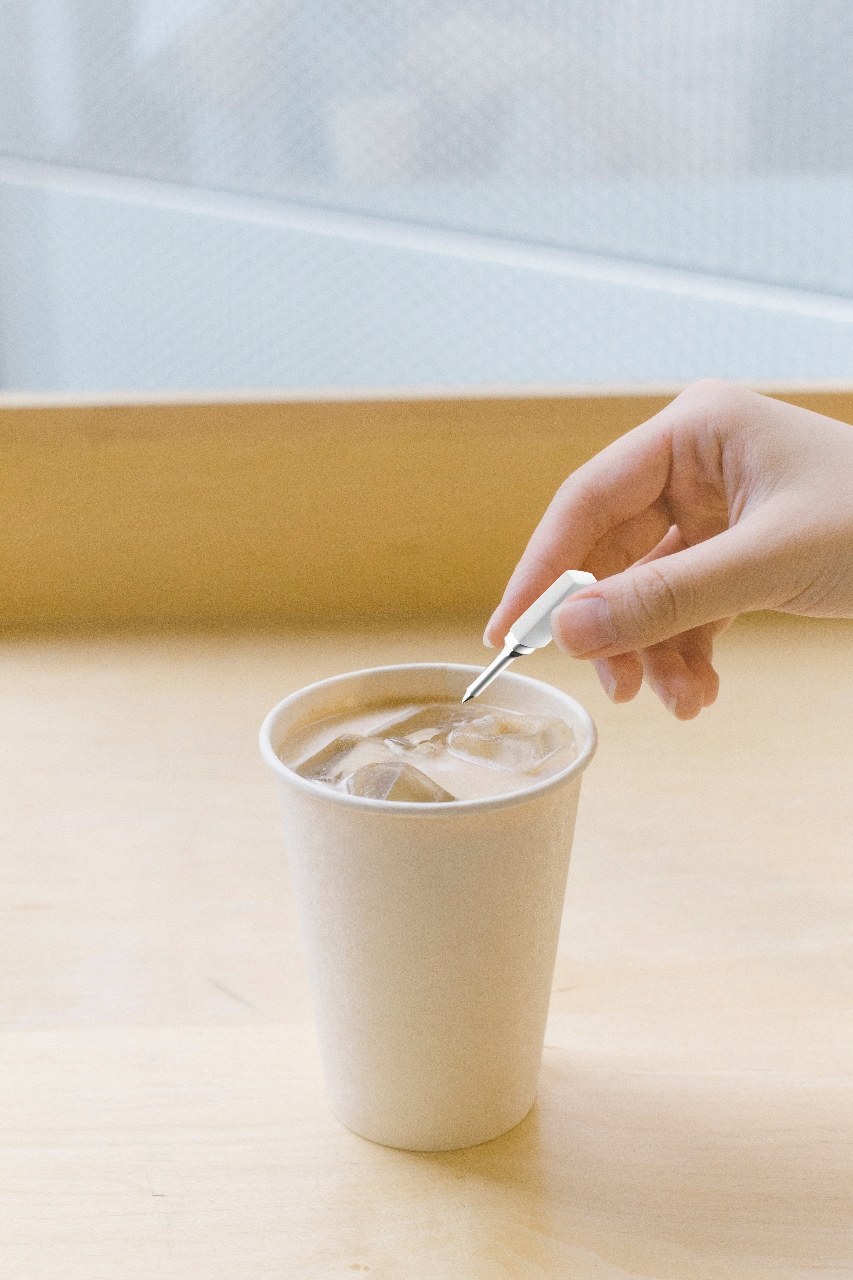
Drink sampling
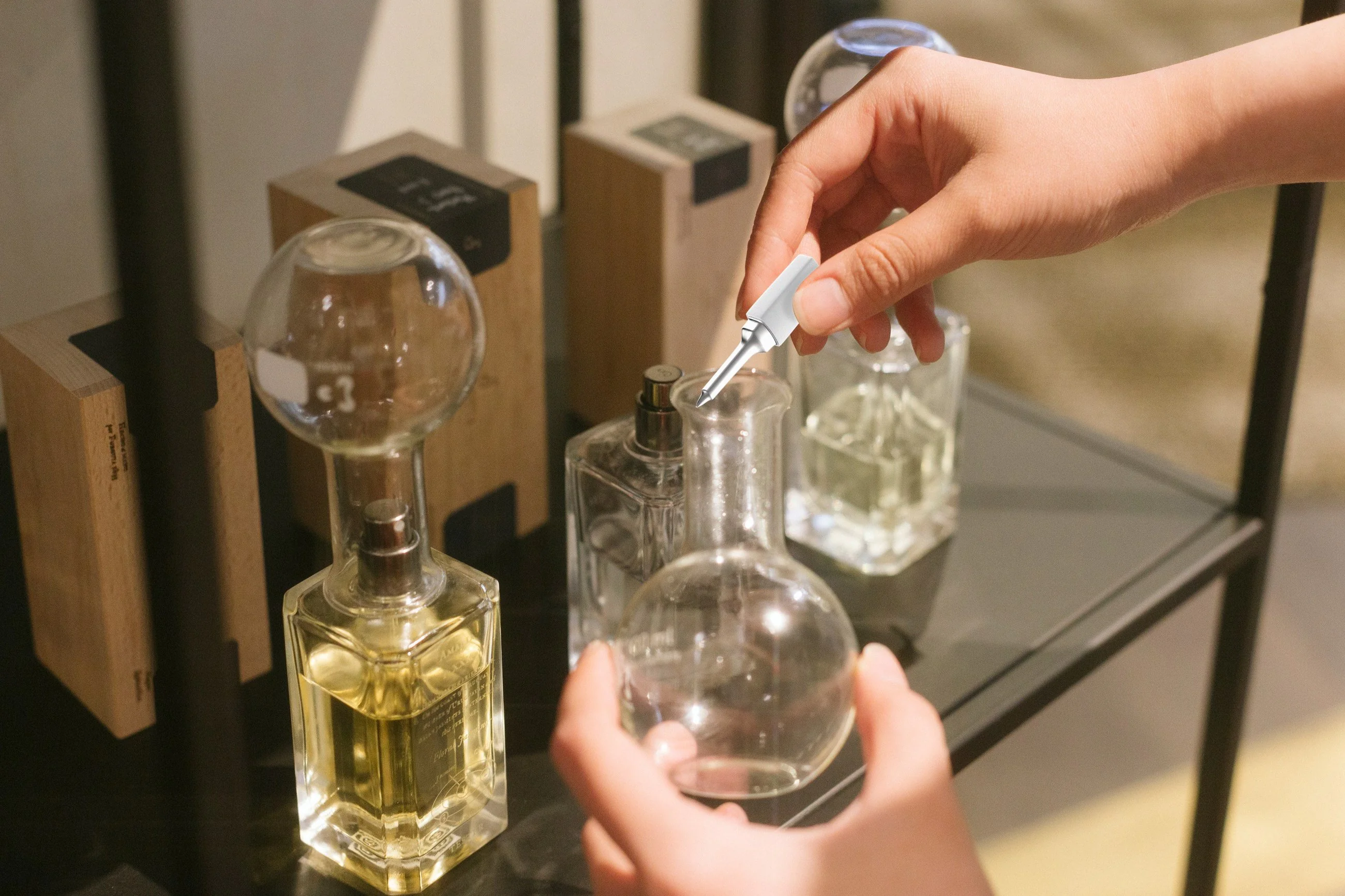
Object sampling
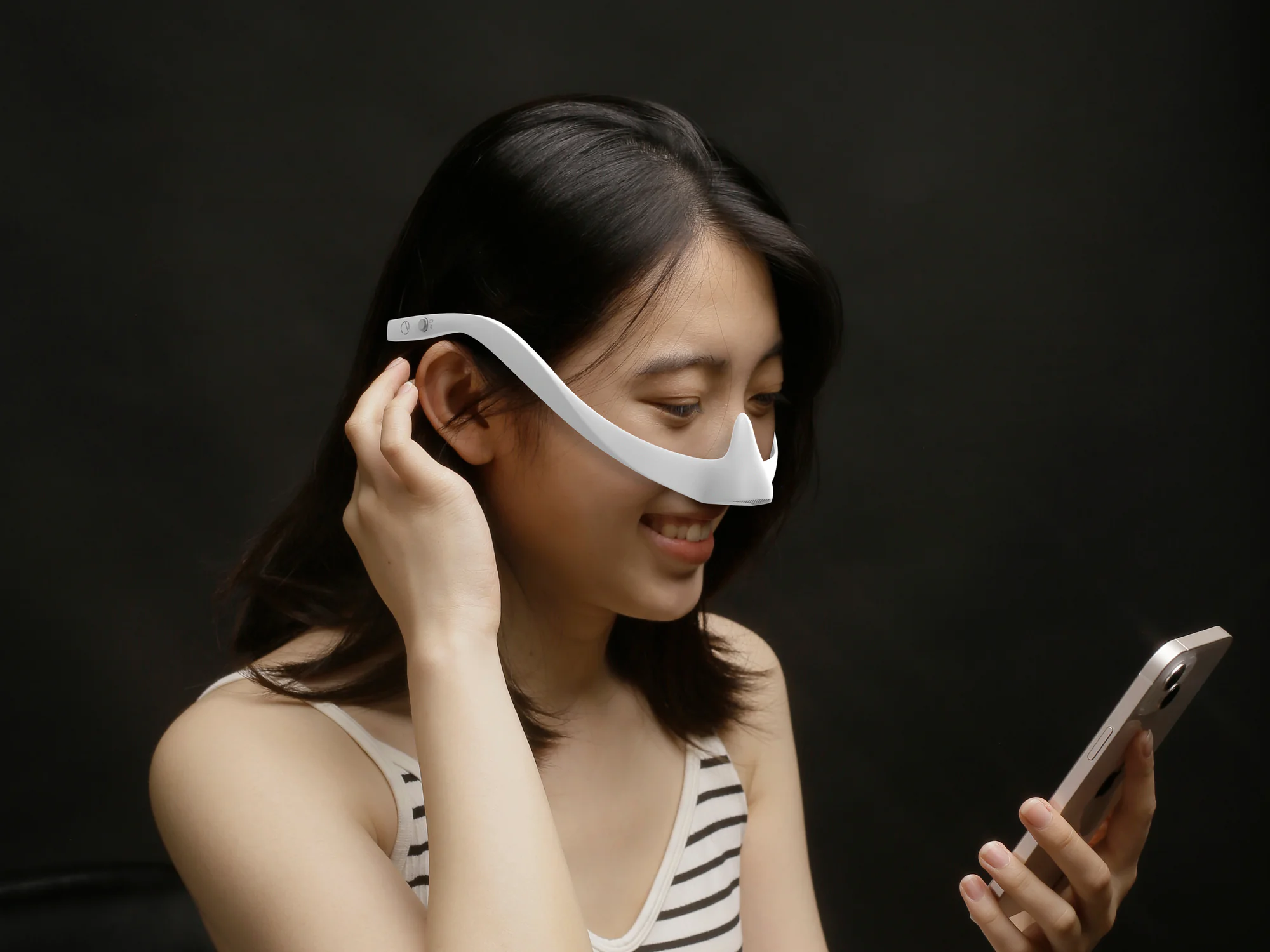
Device and app in use
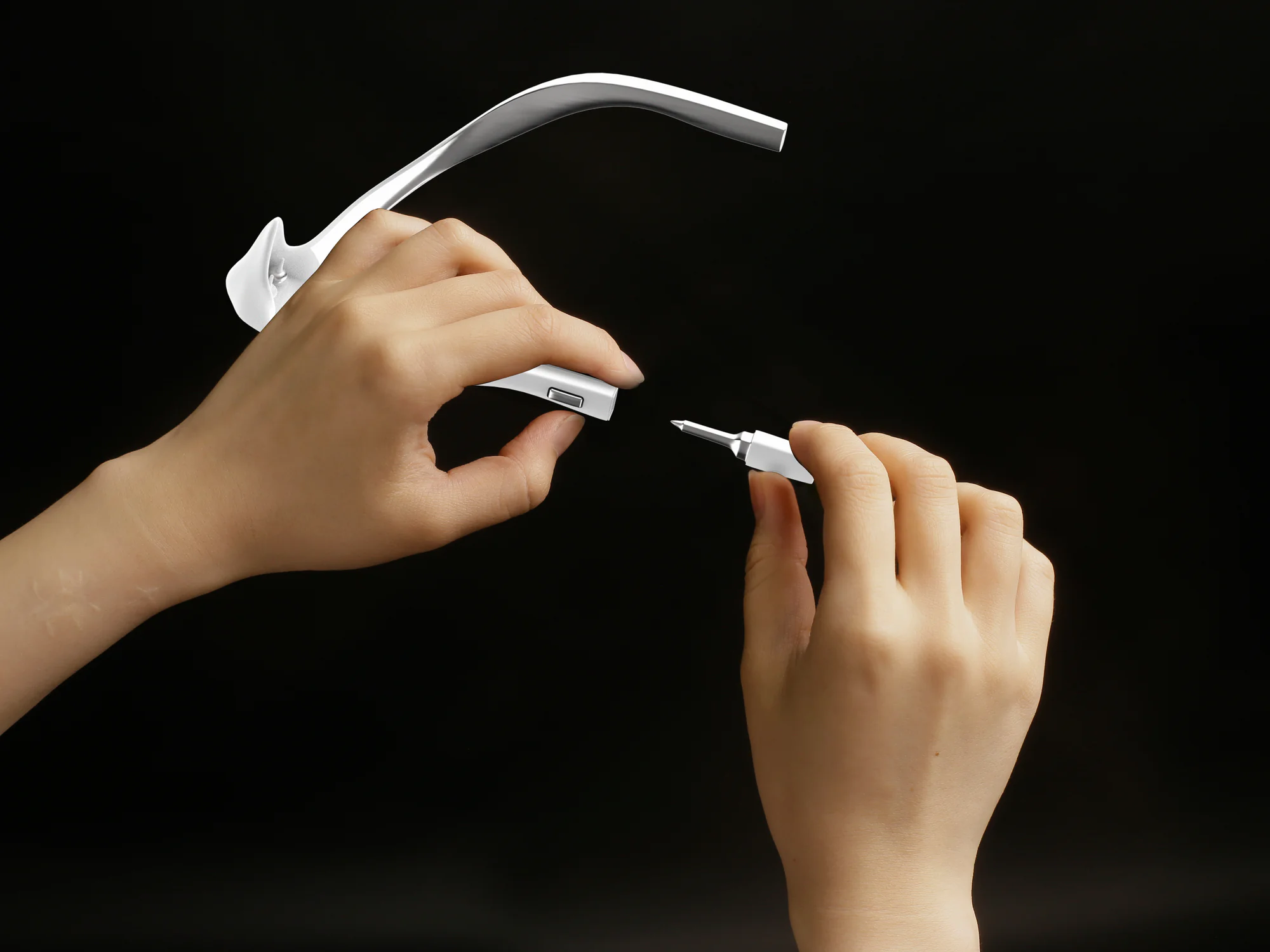
Detaching the collection unit