PureMetric
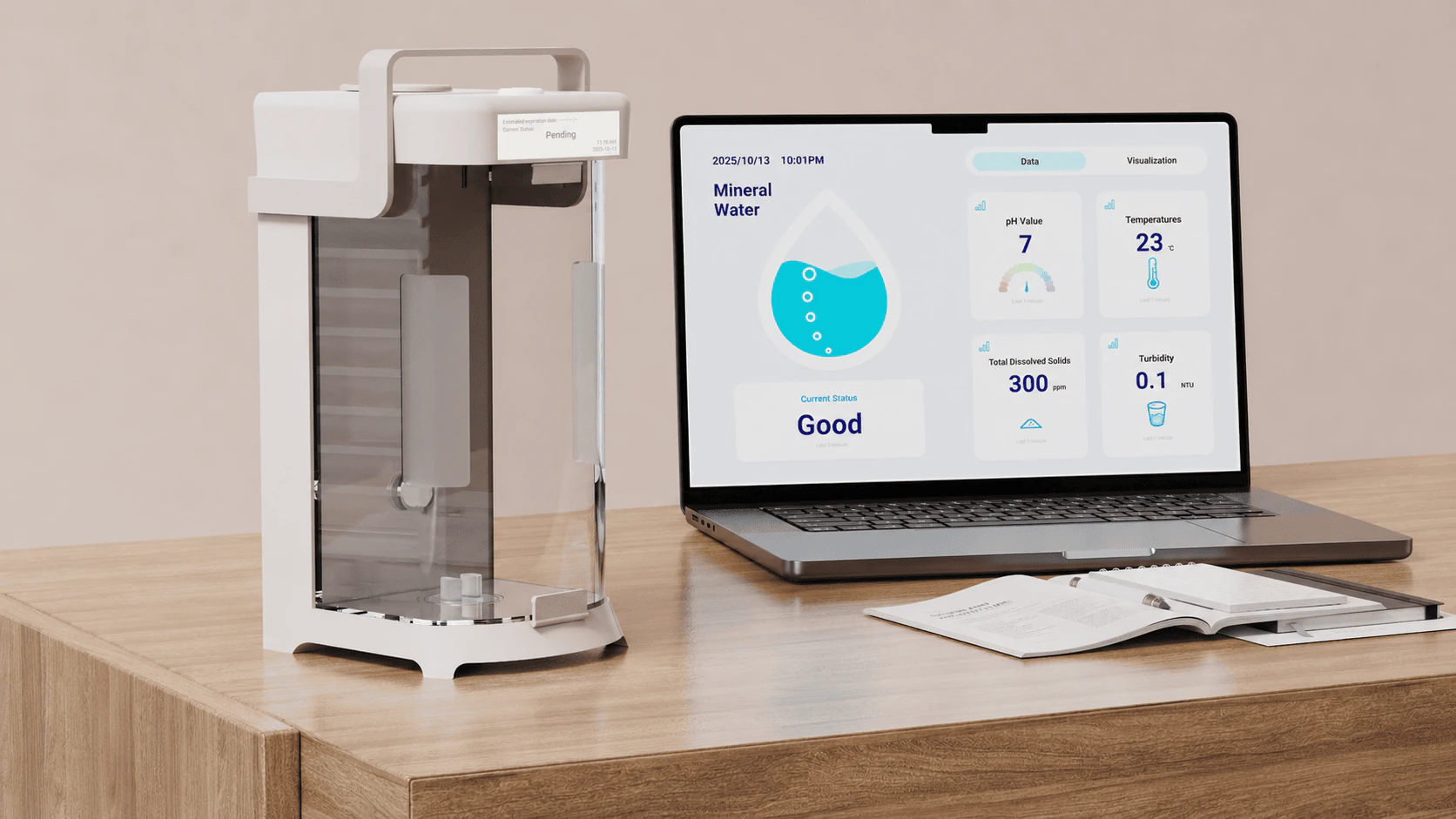
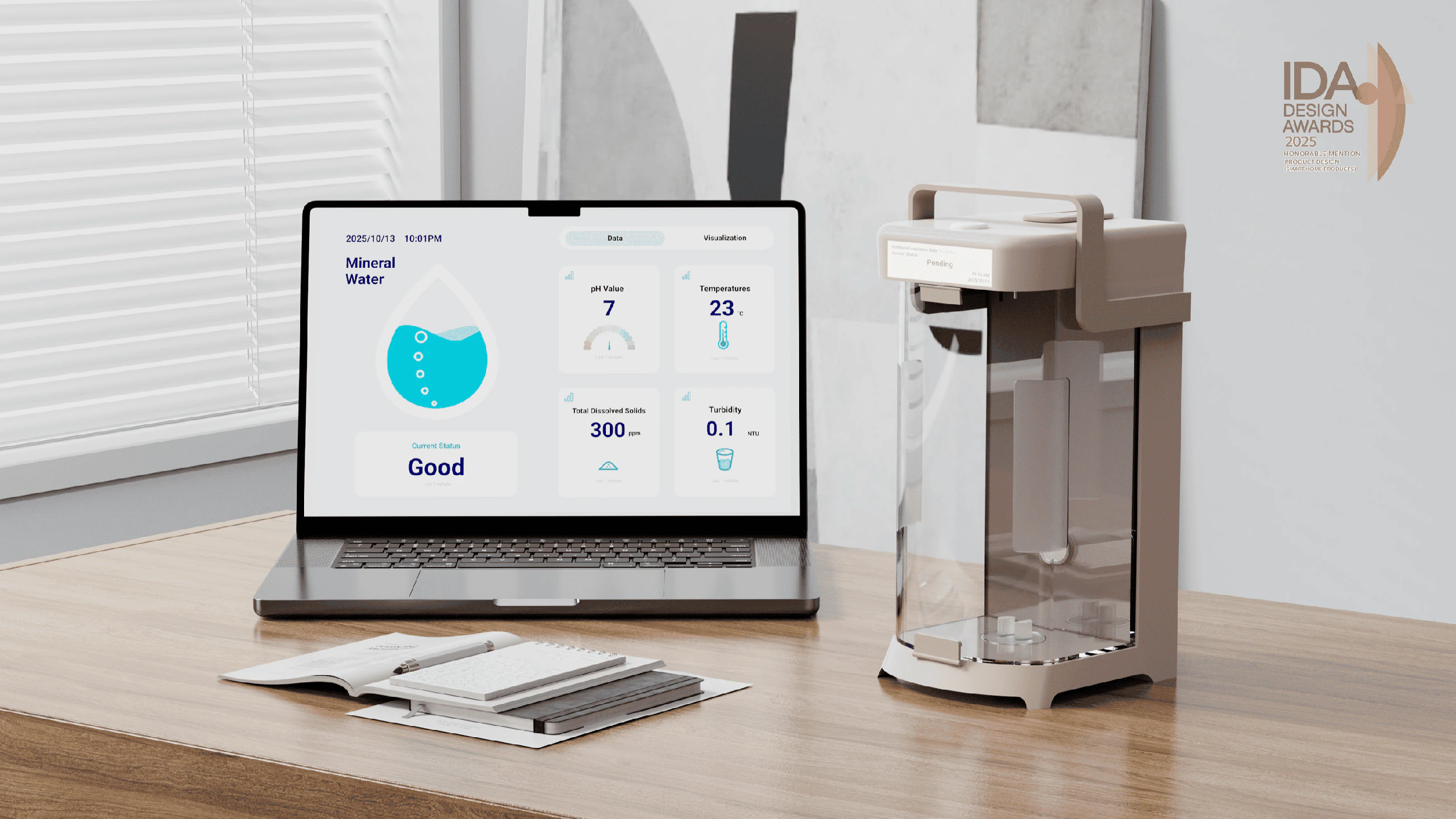
A connected container that answers one question about an opened drink. Is it still good? PureMetric reads pH, temperature, dissolved solids, and turbidity, compares them with the drink's own starting profile, and turns the result into a status on the device, a dashboard, and an AI freshness estimate.
The Problem
An expiration date gives little guidance once a drink has been opened. From that point on, its condition changes with its ingredients, storage temperature, time since opening, and handling. People often rely on memory, appearance, or smell, but early changes can be difficult to notice. This led to the central design question. How could a household container monitor these changes and communicate the drink’s condition without asking people to interpret raw sensor data?
I framed the product around one question. How can a household container watch an opened drink without asking anyone to read raw sensor values?
Sensing Strategy
The first version judged every beverage against the same acceptable range. That approach quickly failed because fresh drinks can begin with very different pH, dissolved solids, and turbidity levels.
I replaced the fixed thresholds with a baseline created for each new drink. PureMetric records a stable set of initial readings, then compares later readings with that starting profile. pH is evaluated by its distance from the baseline. Dissolved solids and turbidity are evaluated by percentage change. Temperature helps interpret how quickly those changes develop.
Finding
One sensor could miss change that another sensor caught.
Design Response
Combine pH, dissolved solids, turbidity, and temperature measurements as one profile.
Finding
Different beverages began with very different sensor values.
Design Response
Create a baseline for each new drink.
Finding
Sensor noise could trigger incorrect status changes.
Design Response
Use repeated sampling, outlier filtering, and smoothing before updating the status.
Prototype Validation
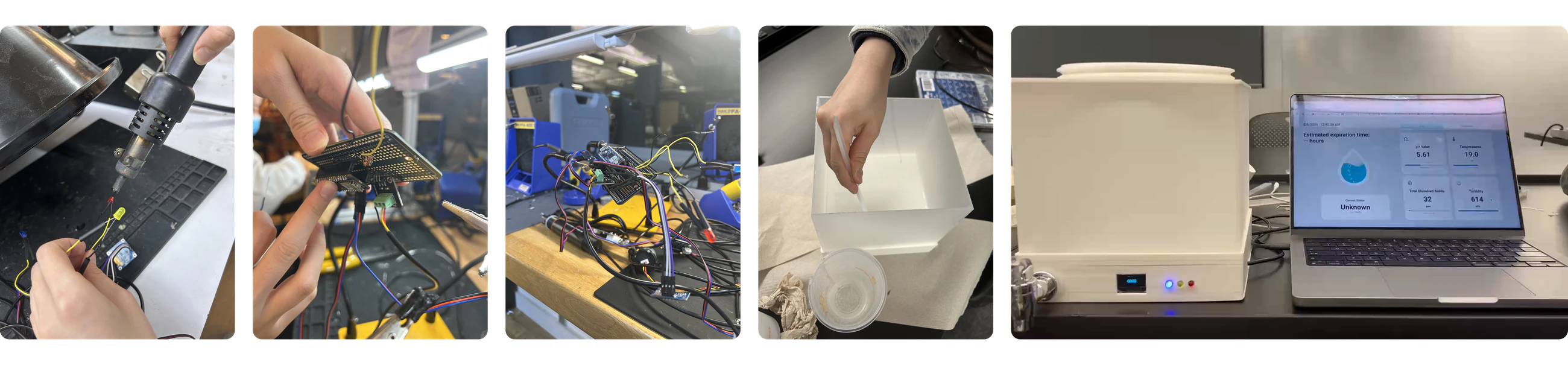
Before designing the enclosure, I ran a seven-day test with coconut water to observe how the sensor readings changed over time. The sensors sampled once per second. I first monitored the readings through the serial monitor, then tested the full connected pipeline.
The test revealed that raw readings were sensitive to movement, electrical interference, air bubbles, and changes in probe position. Based on these results, I refined both the sensing logic and the enclosure. The system now collects and filters multiple readings before updating the status, creates a stable baseline for each new drink, and holds the probes at a fixed depth.
Serial monitor test
Coconut water sensor test
Dashboard Iteration
The early dashboard displayed each sensor as a separate live value. In interviews with six participants who regularly buy drinks in cartons, all six said they also wanted to see how the drink was changing over time. A status such as “Good” might remain unchanged from one day to the next, while the readings behind it could still be changing.
I kept the latest sensor readings visible and added trend views for pH, temperature, dissolved solids, and turbidity. The status and estimated freshness window provide a quick summary, while the charts show how each measurement has changed since the drink was opened.
In follow-up interviews, all six participants said the trend views made them more confident in the displayed status. Even when the status remained “Good” from one day to the next, seeing the underlying readings change reassured them that the sensors were still working rather than simply showing the same result.
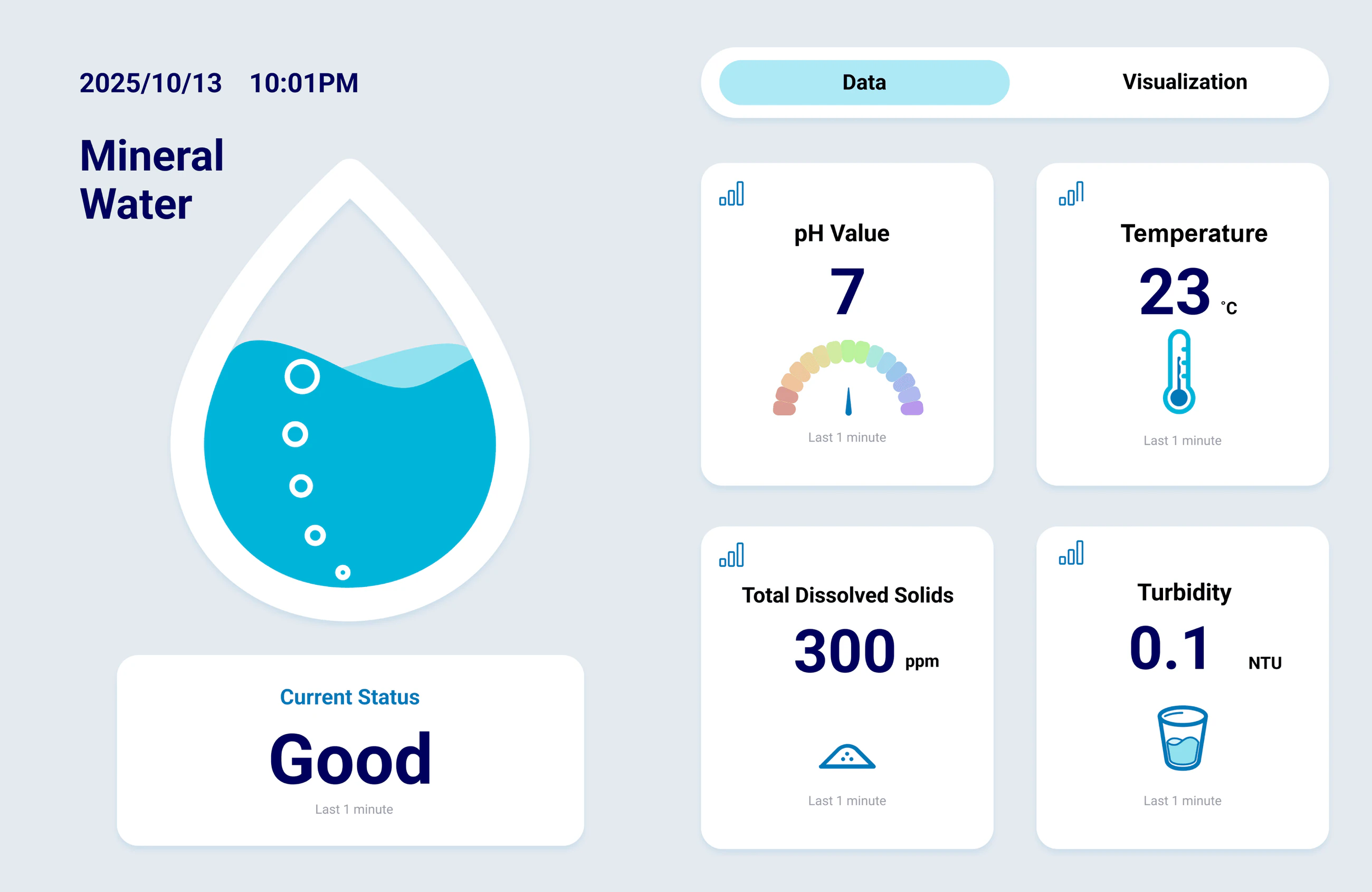
Live status dashboard
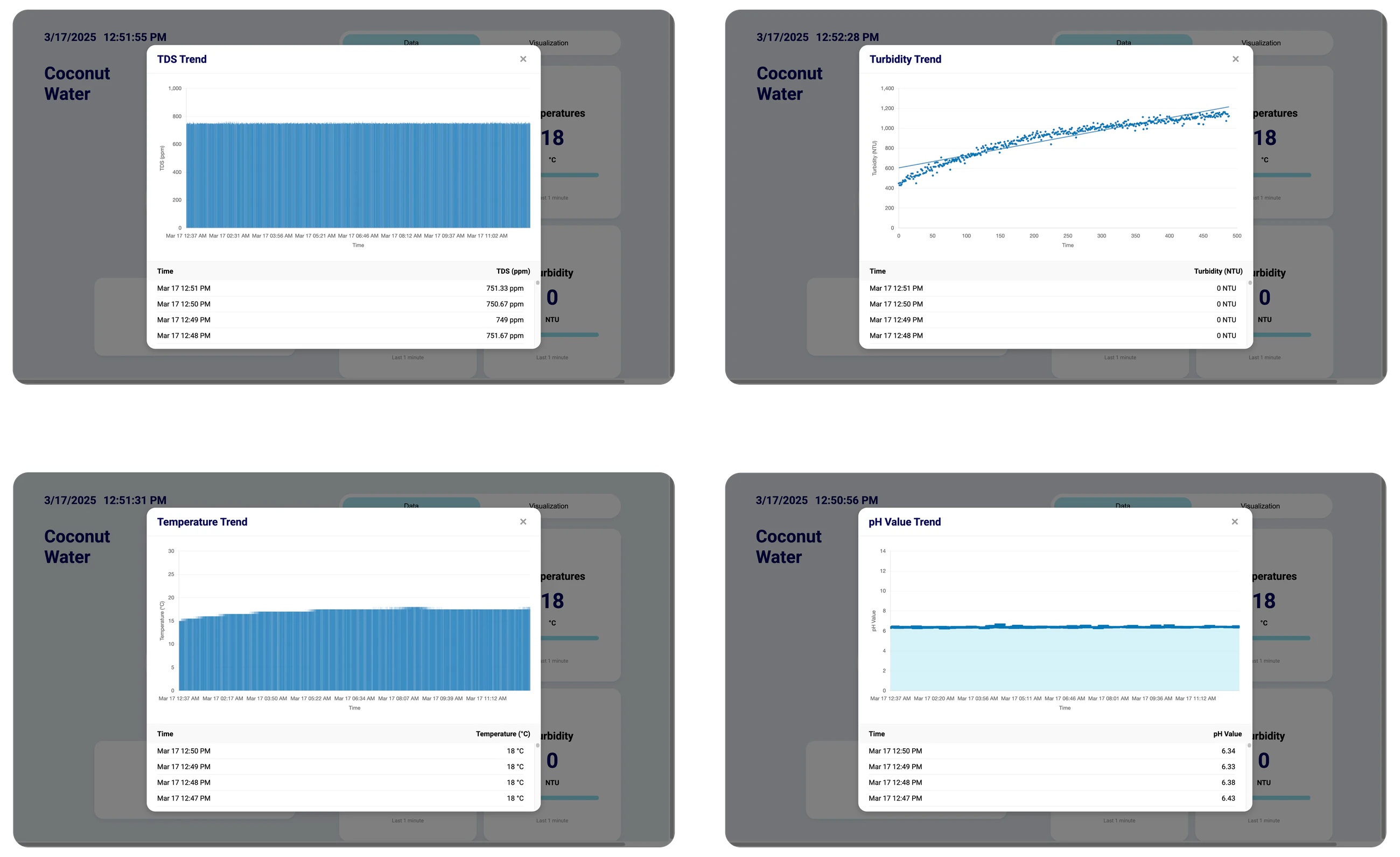
Trend review during the coconut water test
AI Forecast Design
The forecast uses recent sensor trends and beverage-specific thresholds to estimate how much time remains before the readings reach the defined expiration thresholds. Rather than relying on a single measurement, the system combines changes in pH, temperature, dissolved solids, and turbidity to produce an overall assessment and estimated expiration date.
The forecast runs through DeepAI and updates as new readings are collected. By considering both the direction and rate of change, the system can give two drinks with the same current status different estimated expiration dates. After a new-batch reset, it waits until enough trend data has been collected before generating a forecast.
To support remote monitoring, both the container and the dashboard display the estimated expiration date. Users can also review detailed sensor trends remotely through the app.
System Architecture
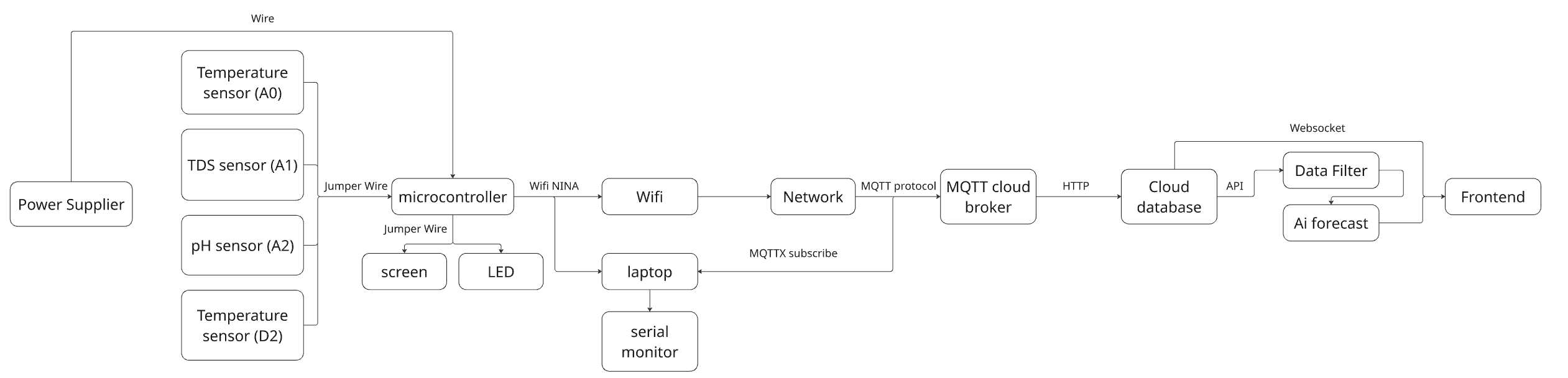
The same dashboard supports both bench testing and connected use. During development, the Arduino reads the four sensor signals and sends the data over USB serial. In connected mode, the readings are sent through MQTT to a Node.js server.
The server stores the time-series data in InfluxDB, streams live updates to the dashboard through WebSocket, and sends recent sensor trends to DeepAI to generate the estimated expiration date.
Enclosure Design
I first built a functional container prototype using the same sensors and electronics planned for the final product. This early version allowed me to test whether the sensors could remain submerged, collect stable readings, and operate together with the dashboard over time. The first prototype focused on function. The next stage focused on turning the same working system into a more considered product form.
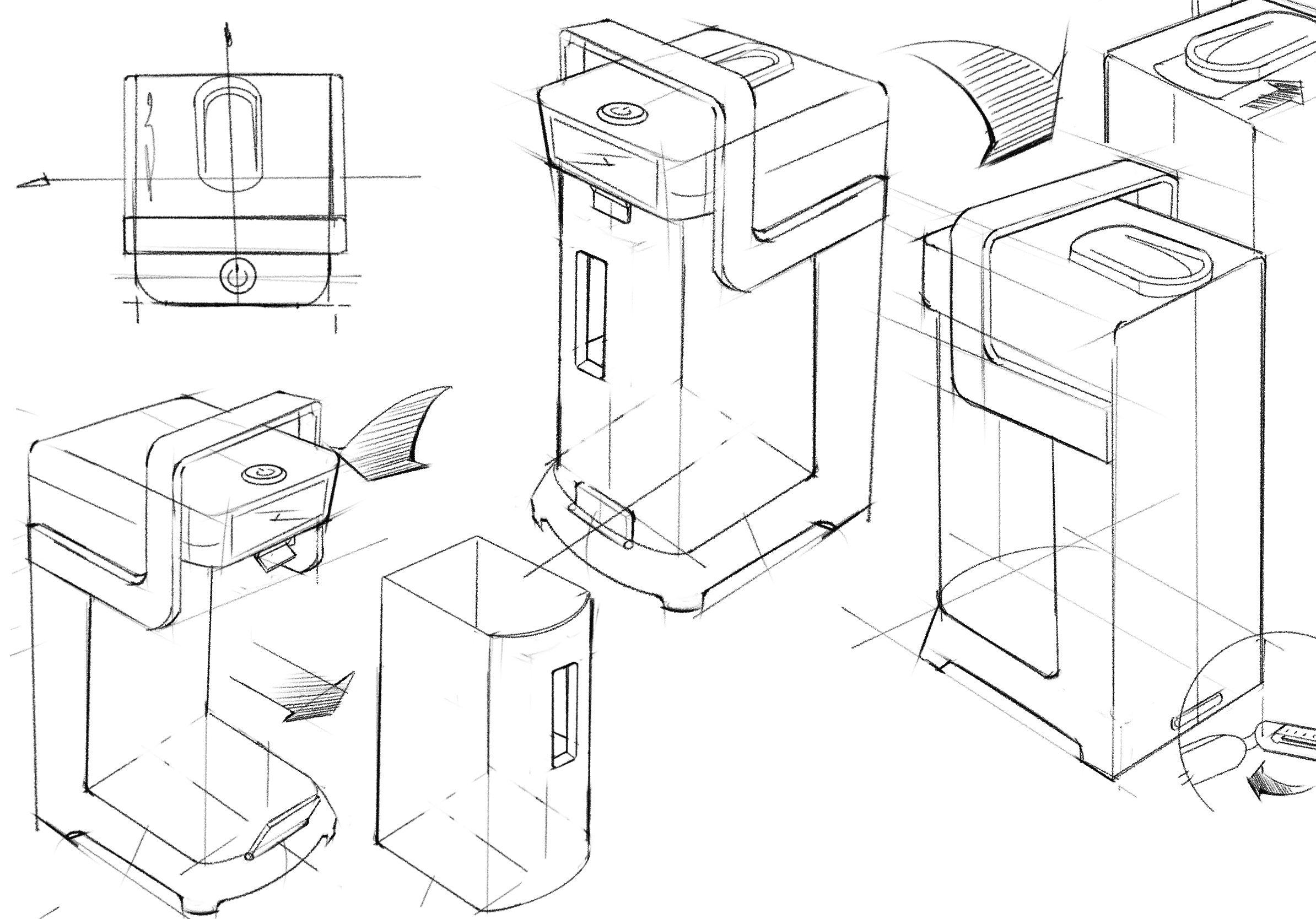
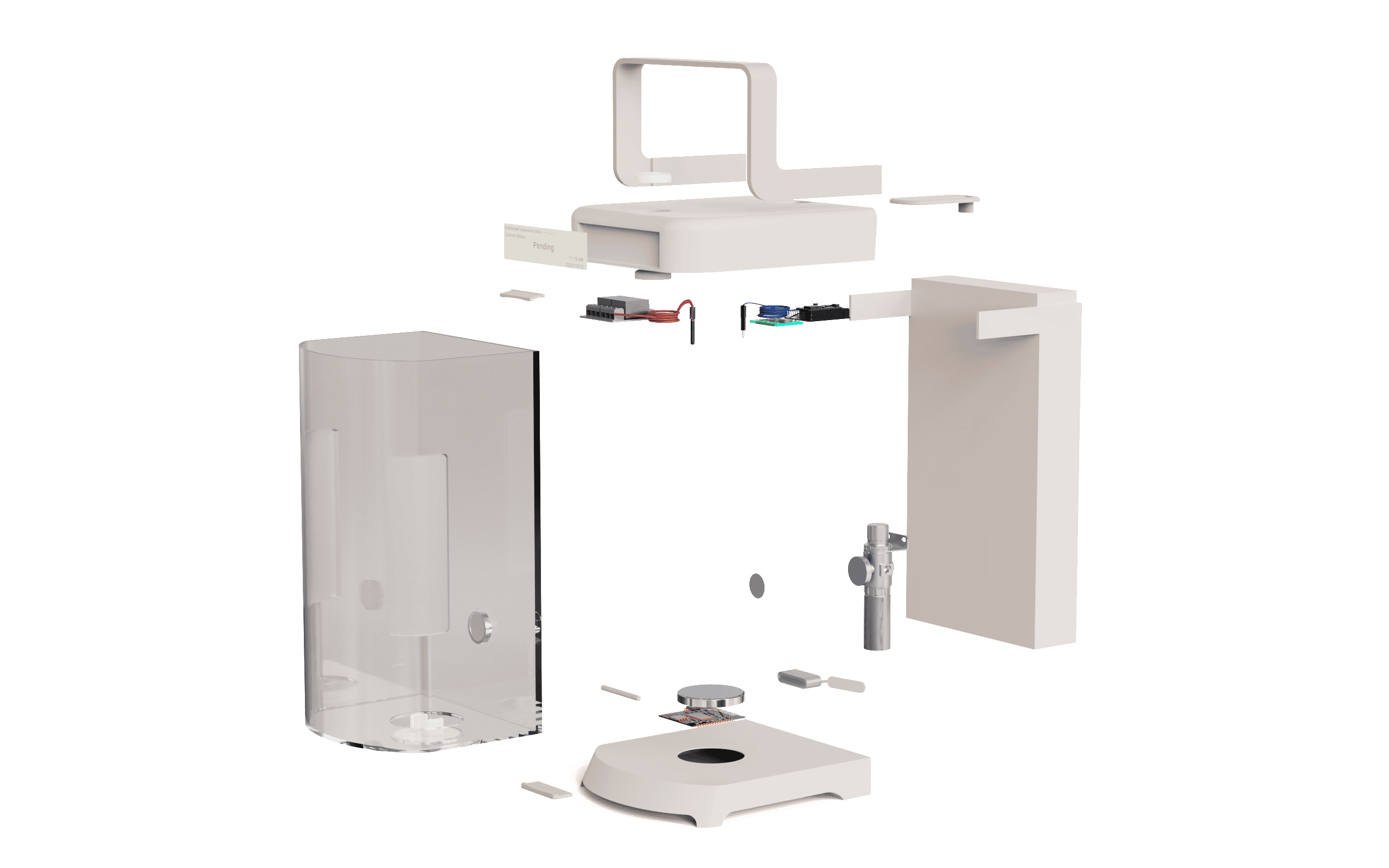
I redesigned the container around the existing components. The final enclosure holds the probes at a consistent depth, separates the electronics from the liquid, and keeps the drink visible. I placed the electronics in the upper housing and extended the probes close to the bottom of the chamber so they remain submerged as the liquid level drops.
Sketches
Exploded assembly
Final Prototype
The final prototype integrates four sensors, the connected data pipeline, the AI forecast, and the remote dashboard into one working system. The display on the container show the drink’s current condition and estimated expiration date. The dashboard provides the same result together with live sensor readings and changes over time, allowing users to monitor the drink remotely.
PureMetric received an Honorable Mention from the International Design Awards in the Smart Home Products category.
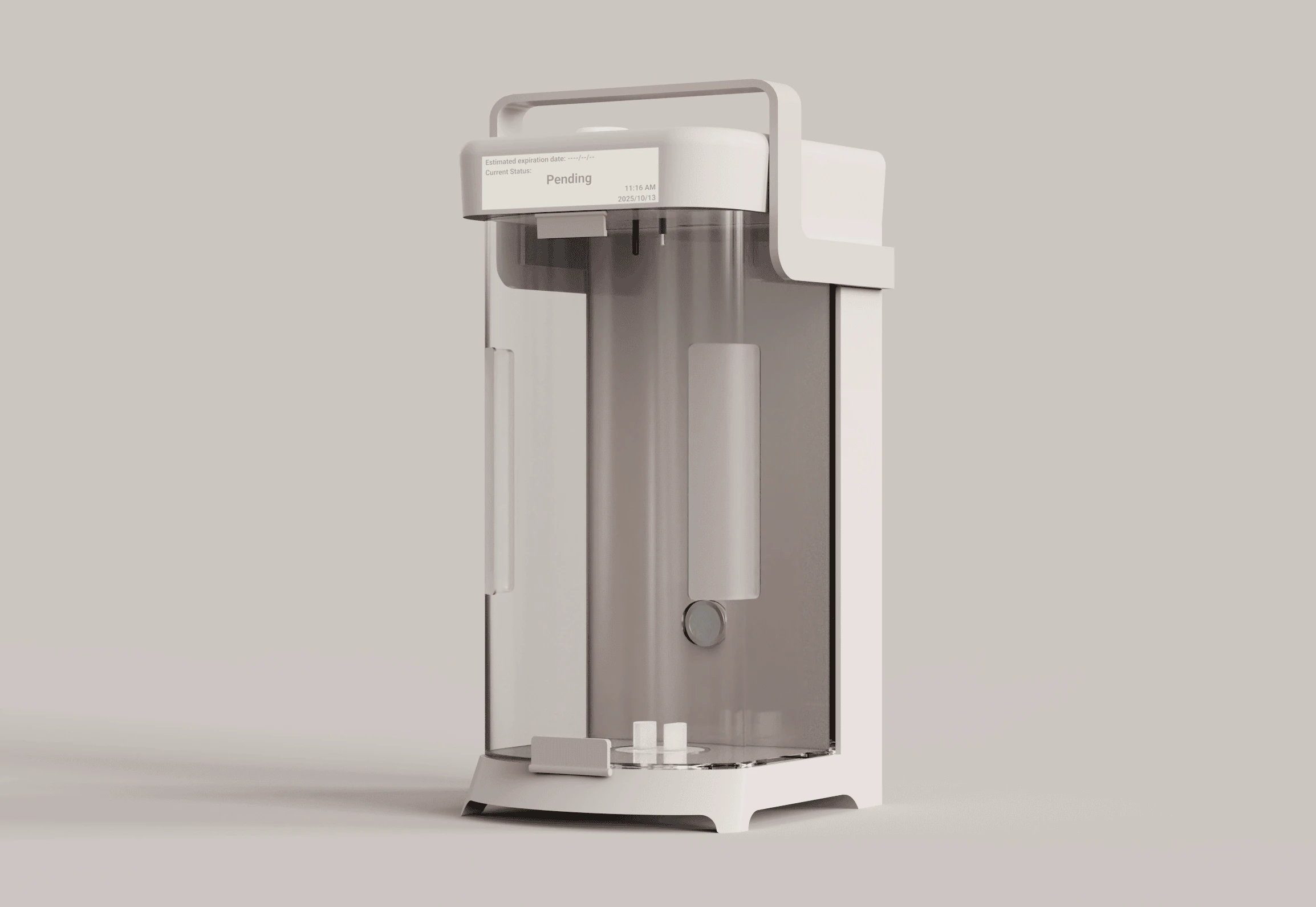
Product view
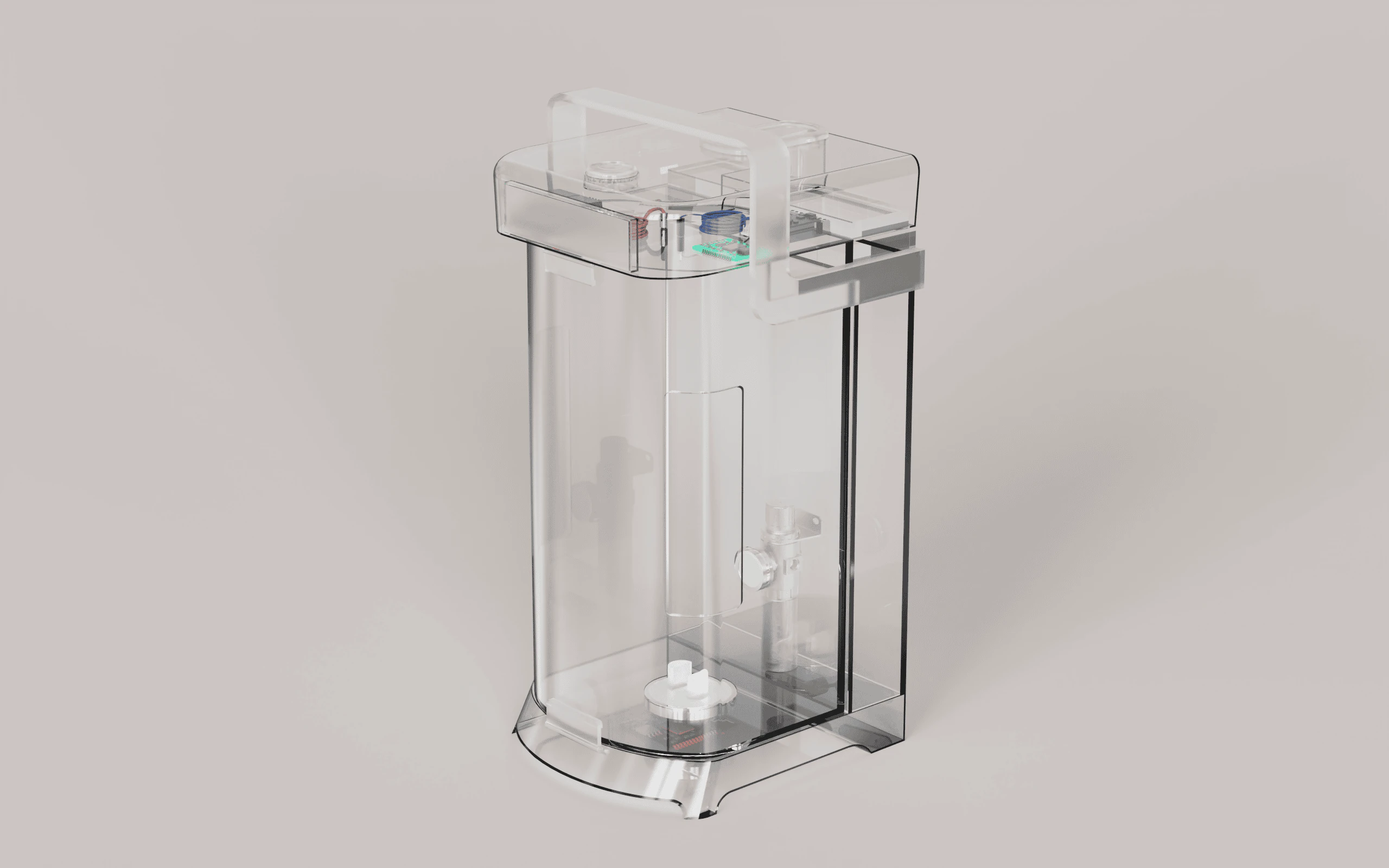
Internal layout